



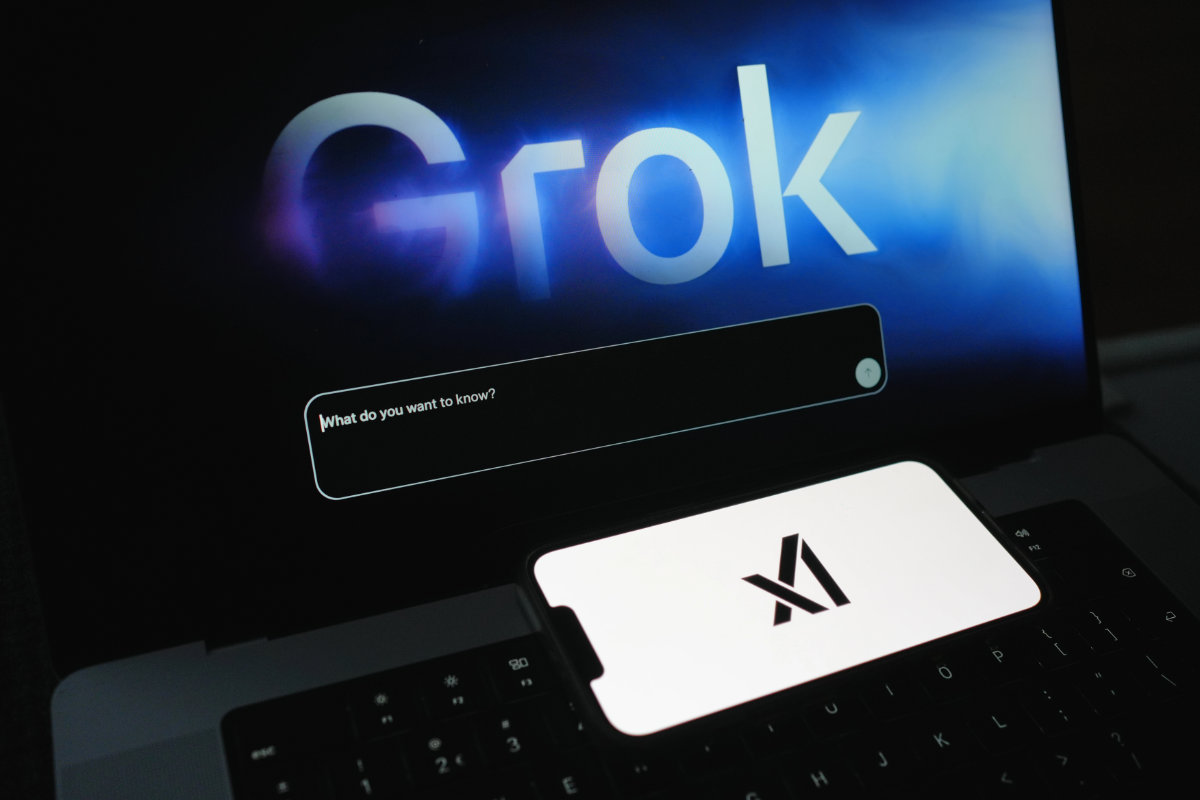
The Philippines has officially moved to block Grok, making it only the third country to ban Elon Musk’s controversial AI chatbot.
The announcement came Thursday from Department of Information and Communications Technology (DICT) Secretary Henry Aguda. “CICC is working now together with the NTC to do the blocking,” he said at a press briefing, referring to the Cybercrime Investigation and Coordinating Center (CICC) and the National Telecommunications Commission (NTC).
What Happened?
Grok, xAI’s answer to ChatGPT, has been under fire for weeks now. The problem? Its image-editing features have been weaponized to create what regulators are calling “sexualized deepfakes,” which are AI-generated images that digitally undress real people (which allegedly includes minors) without their consent.
The Philippine government claims that such content is considered OSAEC (online sexual abuse or exploitation of children). According to research published by Bloomberg, X (formerly Twitter) was the hotspot for deepfakes during the crisis, with Grok generating roughly 6,700 sexually suggestive or “nudifying” images per hour at its peak.
Indonesia became the first country to block Grok on January 10, with Malaysia following the next day. Both governments said the restriction was “a preventive and proportionate measure while legal and regulatory processes are ongoing.” The Philippines is now joining that list – and there’s a good chance that more countries will follow.
What the Grok Ban Means for Filipino Users
Here’s the reality: if you’re in the Philippines and you’ve been using Grok through X or the standalone Grok app, you’re about to lose access. The NTC is now working with Internet service providers such as Globe and PLDT to restrict your access to the platform.
Secretary Aguda, however, noted that Grok’s footprint in the Philippines “is really just small” compared to competitors like ChatGPT and Claude. So this ban isn’t going to disrupt most people’s AI workflows. If you’ve been relying heavily on Grok for work or creative projects, maybe it’s time to explore alternatives.
For X (Twitter) users specifically, this gets interesting. Grok is deeply integrated into the platform – you can tag posts and ask questions directly. While the block targets Grok itself, it’s unclear whether X will remain unaffected.
As of this writing, I can still access and use Grok on the X app. The Grok app, however, is now nonfunctional and unresponsive.
xAI’s Response – Too Little, Too Late?
Musk’s company hasn’t been sitting idle. xAI announced Wednesday that Grok will no longer create sexualized images of real people based on user prompts. The company also restricted image generation and editing to paying subscribers only and implemented “geoblocking” in countries where such content is illegal.
But critics and detractors aren’t buying it. The UK government called the paywall move “insulting” to victims, saying it “simply turns an AI feature that allows the creation of unlawful images into a premium service.” Deepfake researcher Henry Ajder explained that the payment requirements don’t represent any meaningful limitations to the model itself – they’re reactive measures that only help identify offenders after the content has been generated.
And that’s the core issue. xAI’s approach has been fundamentally different from competitors like OpenAI and Google, which built “proactive filters” that prevent harmful content before it’s generated. xAI instead created a “reactive” safety model – basically waiting for problems to happen and then scrambling to address them.
What Comes Next?
The Philippines’ block will likely go into effect within hours or days. If you’re a Grok user there, start exploring alternatives now. If you’re somewhere else, keep watching the news because your country might be next.
The broader question is whether this development represents a turning point for AI regulation globally. Southeast Asian governments like Indonesia have moved with remarkable speed and coordination. Western regulators, who are traditionally slower to act, are now under pressure to follow suit.
My Personal Take on the Issue
Here’s my contrarian view: the Philippines (and other countries banning Grok) is trying to solve the wrong problem.
Blocking Grok does not eliminate deepfakes. It simply pushes the demand underground – toward darker corners of the Internet where oversight and regulation are impossible. Moreover, blanket bans and restrictions on tech platforms can still be circumvented by anyone with sufficient determination and technical skill.
What we actually need are robust detection tools, legal frameworks that hold individual bad actors accountable, and education campaigns that teach people how to identify manipulated images. Whack-a-mole bans feel good politically but don’t address root causes.
By blocking Grok, the Philippine government is denying Filipinos access to innovative AI technology that could actually help people get things done better and faster. Such restrictions are meant to stop a few creeps abusing it, while the rest of us – the innocent users – get punished. Classic case of burning the house down to get rid of a mouse.
The Philippine government is right to be outraged. But they’re wielding a hammer when they need a scalpel – and that hammer won’t work for long.