



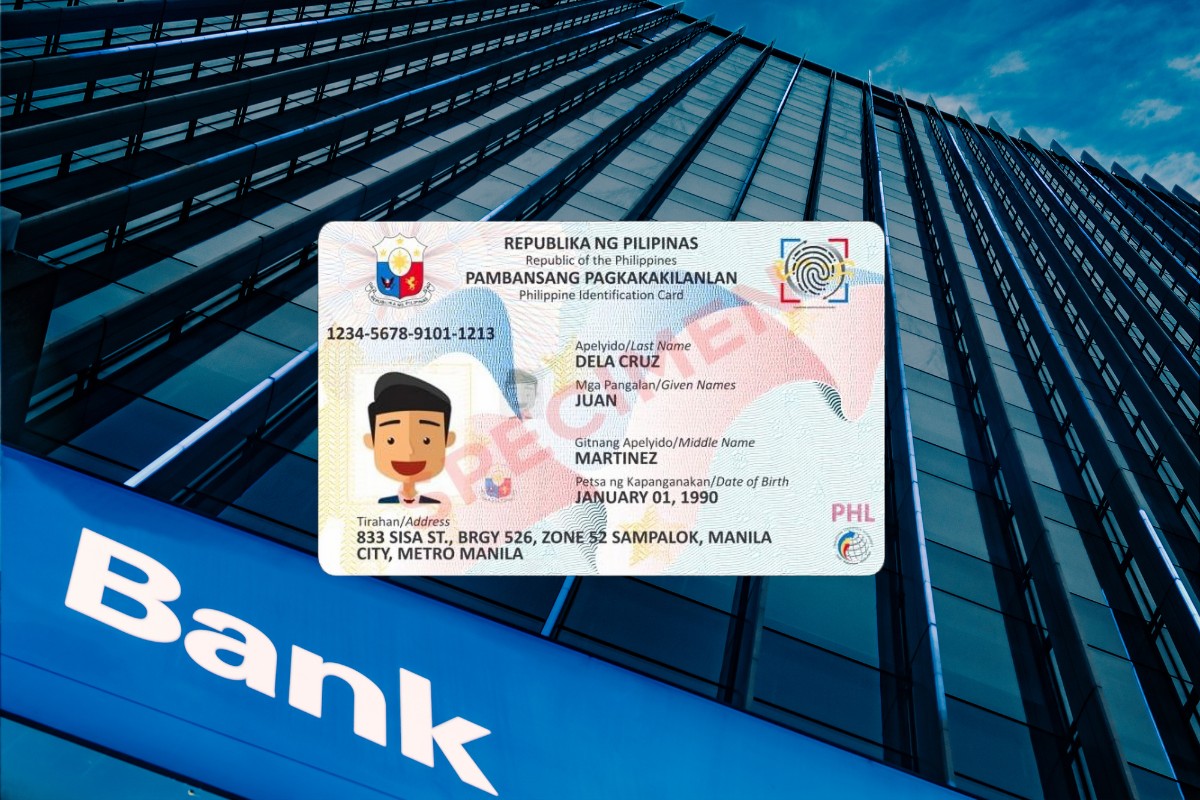
The Bangko Sentral ng Pilipinas (BSP) is proposing to require banks, digital lenders, e-wallets and other supervised financial institutions to connect their customer verification systems to the government’s National ID database. Under a draft memorandum released for industry consultation, nearly all BSP-supervised institutions would have to onboard with the Philippine Statistics Authority’s National ID Authentication Services, or NIDAS, for customer due diligence, including account opening and identity verification.
This means that banks and e-wallets such as GCash and Maya would be able to confirm a customer’s identity electronically against the National ID system instead of requiring a physical or printed ID. As of end-October 2025, 80 percent of the country’s population, or 90.29 million Filipinos, had been registered under the National ID system, according to PSA data cited by BusinessWorld.
The BSP said the integration is meant to expand the National ID’s role as the country’s primary and official proof of identity, subject to proper authentication, while strengthening know-your-customer procedures across the financial system.
“NIDAS integration is a necessary regulatory measure to support the broader use and adoption of the National ID as the country’s foundational identity system,” the central bank said in a statement.
“NIDAS enables BSIs to leverage the National ID for more accurate, secure, and efficient customer identification and verification, strengthening know-your-customer processes,” it added.
The rollout will happen in two phases. Universal and commercial banks with retail banking services, digital banks, electronic money issuers and virtual asset service providers must submit complete NIDAS applications within three months of the memorandum’s issuance.
All other universal and commercial banks, thrift banks, rural and cooperative banks, covered payment system operators and remaining BSP-supervised institutions will have six months to comply. An institution is considered initially compliant once it submits a complete application and meets all documentary and regulatory onboarding requirements to the PSA.
Financial institutions will be required to adopt an authentication tier appropriate to the risk profile of the customer, product, service or transaction. Under the Philippine Identification System, Tier 1 covers basic online authentication through PhilSys number token verification, while Tier 2 covers electronic know-your-customer services using pre-agreed demographic data shared between the institution and the PSA. A third tier, allowing interoperability across institutions through back-end token matching, is not yet operational.
The BSP clarified that the requirement will not prevent institutions from accepting other valid identification documents or alternative verification methods, particularly when a customer does not present a National ID or when NIDAS is unavailable. Once due diligence is completed through NIDAS, the resulting authentication confirmation may satisfy identification requirements for first-time customers, removing the need to present a physical ID.
Institutions will also be required to maintain governance arrangements, anti-money laundering and counterterrorism financing controls, cybersecurity safeguards, data protection measures and customer consent mechanisms throughout the integration. The BSP said it will monitor compliance through the PSA and may impose supervisory enforcement measures against institutions that fail to comply within the required period.