



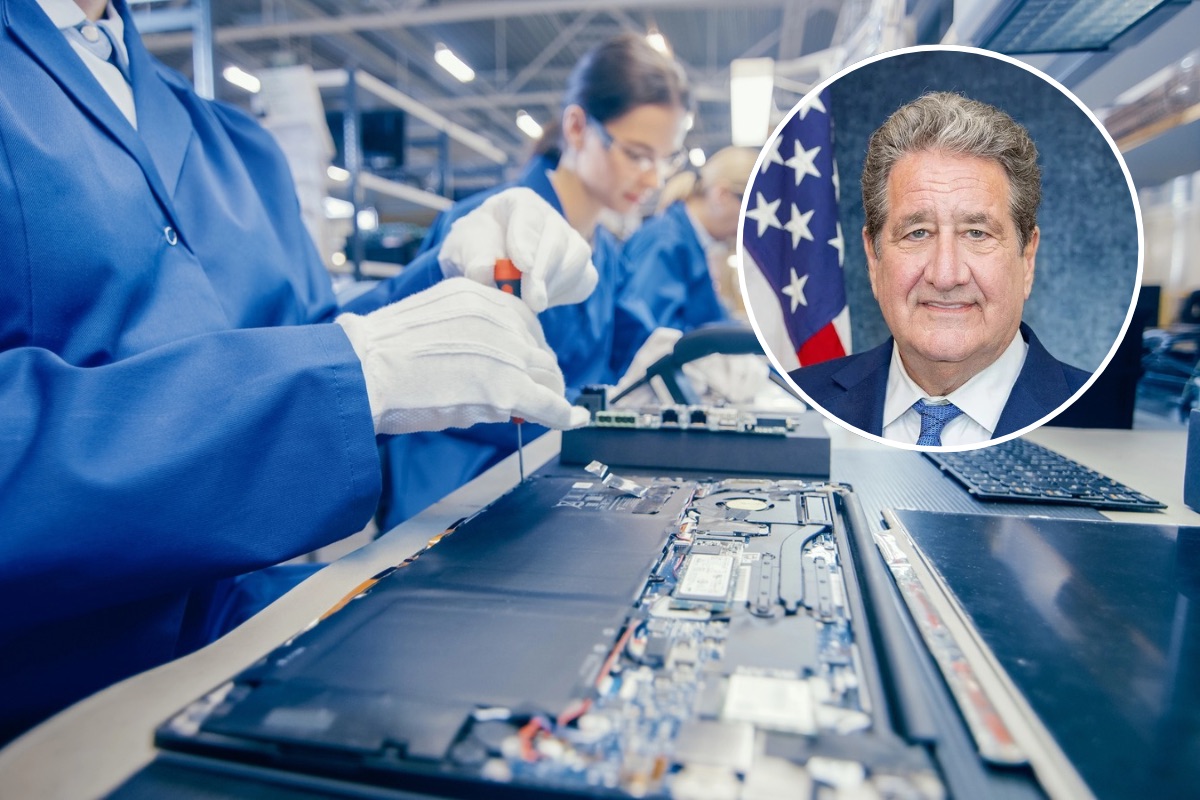
United States Ambassador Lee Lipton said that no announcement on the Pax Silica Economic Security Zone was planned for the ASEAN Summit in Manila this month, dismissing talk that a major announcement on the US-led project would be made.
Lipton made the statement in a post on X on Saturday to address comments in the media.
“No such announcement on the Pax Silica Economic Security Zone was ever planned,” Lipton said.
“Decisions will be made in full consultation with the government of the Philippines at the appropriate time,” he said.
Lipton added that the process would include rigorous discussions on the initiative’s potential impact on stakeholders.
Joshua Bingcang, president of the Bases Conversion and Development Authority (BCDA), earlier said the signing of a framework agreement for Pax Silica could be among the major announcements during the summit.
He said in June that the BCDA and the US Department of State were working on a proposed agreement covering the legal, commercial and other issues involved in developing the Pax Silica industrial enclave inside New Clark City. Bingcang said the BCDA was targeting a November signing but that no definite date had been set.
Palace Press Officer Claire Castro said this week that the agreement had not yet been finalized. Asked whether it could be signed during the summit, she said the government would see whether negotiations could be expedited.
Malacañang said on Wednesday that the BCDA was awaiting Washington’s response to a draft framework agreement. Philippine Ambassador to the United States Jose Manuel Romualdez said that a deal is unlikely to be finalized during US President Donald Trump’s visit because the two countries are still working out details.
The Philippines joined Pax Silica in April as its 13th participant. The US-led coalition aims to secure supply chains for critical minerals, semiconductors, artificial intelligence and advanced manufacturing, and now has more than 30 countries. Manila has identified a 1,619-hectare site in New Clark City in Capas, Tarlac, for the proposed hub.
The hub would form part of the Luzon Economic Corridor, an infrastructure and investment initiative involving the Philippines, the United States and Japan. The corridor aims to link Subic Bay, Clark, Metro Manila and Batangas with rail, port and airport infrastructure.
The BCDA estimated that the Pax Silica hub could attract $40 billion to $70 billion in investments and generate 130,000 to 190,000 direct jobs over several decades. It has named Apple, Nvidia, Qualcomm and Taiwan Semiconductor Manufacturing Co. as potential investors, although no firm commitments have been announced.
Farmers, indigenous communities and environmental groups have raised concerns about possible displacement, the project’s water and electricity demand, and its environmental impact.
A discussion paper by the University of the Philippines Center for Integrative and Development Studies claimed that attracting major technology companies would not necessarily lead to technological advancement for the country. It said the Philippines could remain largely a manufacturing base while research and design continue overseas, and it called for stronger domestic technological capabilities.
The White House and the Philippine government separately confirmed last month that Trump will attend the summit, where he is expected to hold talks with regional leaders.