


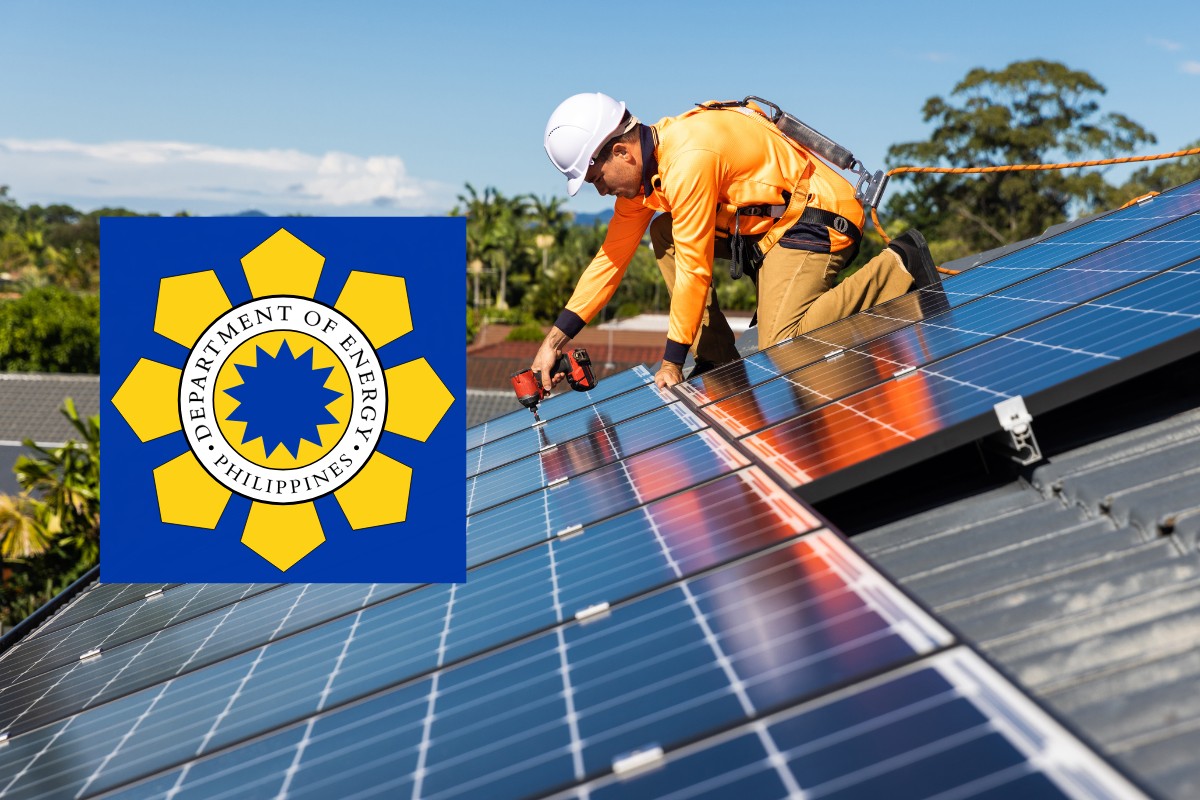
The Department of Energy (DOE) has removed permit, clearance, and fee requirements that previously applied to small-scale solar panel installations by households and businesses, under a circular signed by Energy Secretary Sharon S. Garin on July 28.
Department Circular No. DC2026-08-0017 sets new rules for two categories of solar installations: self-generating facility zero-export solar systems (SGF ZESS), used by households and larger facilities that do not sell excess power back to the grid, and micro-solar systems (MSS), the smaller plug-and-play units marketed directly to consumers.
The circular removes several steps that previously hindered the installation of solar panels. Distribution utilities (DUs) are now barred from requiring pre-installation clearances, technical permits, or inspection fees before a homeowner can install either system. Power companies are also prohibited from reducing a household’s assigned transformer or service drop capacity because a solar unit was installed, which keeps full grid backup available whenever the solar system is not producing power.
The rules are tiered by equipment size. Micro-solar systems – plug-and-play units with a direct current capacity of up to 1,000 watts and factory-set micro-inverters capped at 800 watts alternating current – are exempt from local government building permits and from securing a certificate of compliance (COC) from the Energy Regulatory Commission (ERC). Consumers only need to send their host utility a written notice after installation.
Larger grid-connected SGF ZESS installations still require a written notice to the utility, a standard building permit, and an ERC certificate of compliance, though residential households, clinics, hospitals, and other medical facilities are exempt from the COC requirement. Off-grid, standalone installations do not require any utility notification.
Utilities may still conduct distribution impact studies for grid management purposes, but the circular requires them to shoulder the cost of these studies and bars them from using the studies to delay or block an installation. Distribution utilities have 30 days from the circular’s effective date to update their internal procedures and Citizens’ Charters accordingly.
Theresa “Tetchi” C. Capellan, chairman of the Philippine Solar and Storage Energy Alliance, said the streamlined permitting process would reduce the cost of doing business and shorten installation timelines. “But there has to be a mechanism to ensure the protection of consumers. This is the challenge that government and industry need to resolve so that the homeowners remain protected and safe,” Capellan said.
The DOE said the changes support its target of raising the share of renewable energy in the national power mix to 35% by 2030 and 50% by 2040. “We are pushing faster, simpler, and more responsive approval processes so that more households and businesses can benefit from rooftop solar, lower their electricity bills, and strengthen their resilience against global energy price shocks,” Garin said.
The circular follows an April directive from the DOE ordering utilities, electric cooperatives, and local governments to fast-track net metering applications. As of end-2025, the national grid recorded 21,224 qualified net-metering end-users with a combined rated capacity of around 200 kilowatt-peak.
The DOE is coordinating with the Department of Human Settlements and Urban Development to allow solar installations on residential balconies, windows, rooftops, and exterior walls in urban areas. The ERC has 90 days to release the technical, commercial, and licensing frameworks needed to complete the circular’s implementation.