



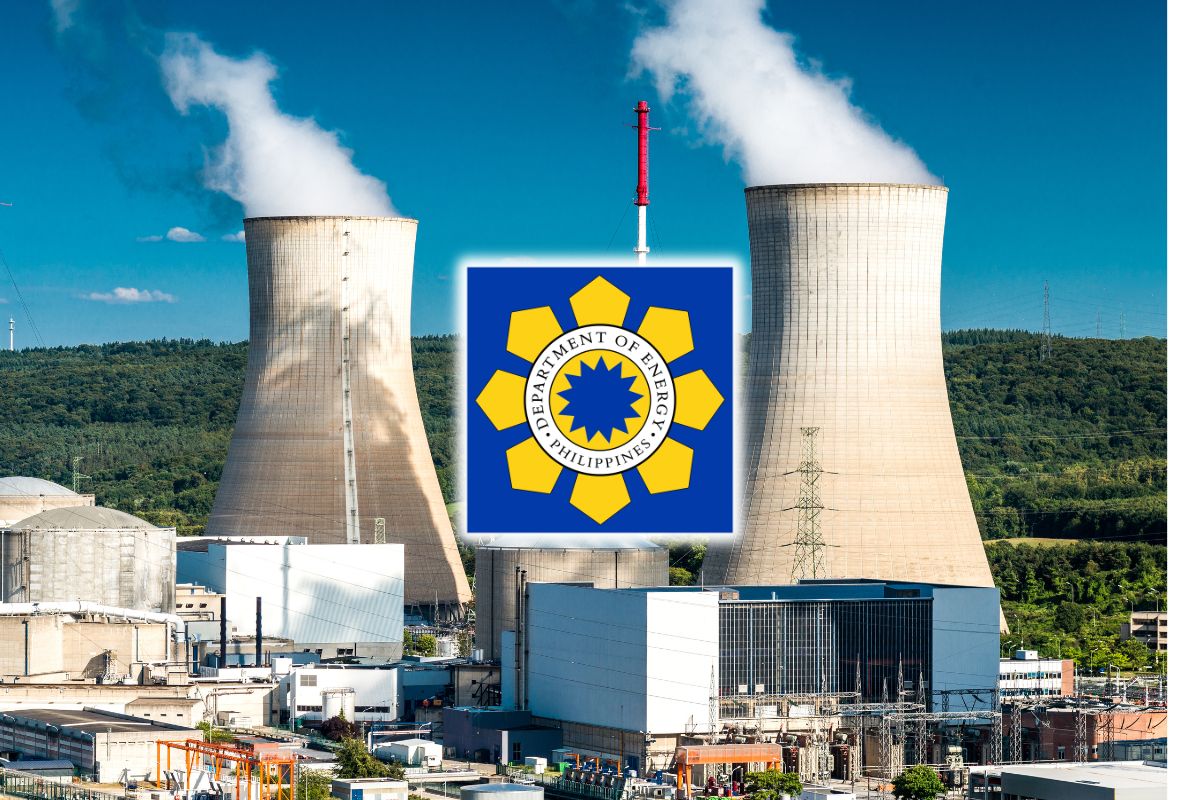
The Department of Energy (DOE) is targeting 1,200 megawatts of nuclear power capacity by 2032 under the Philippine Energy Plan, as government agencies continue technical, regulatory, and site studies for the country’s nuclear energy program.
Amelia de Guzman, director of the DOE’s Energy Research Testing and Laboratory Services, confirmed the target remains part of the department’s pipeline during a media tour of the agency’s Energy Museum on Thursday, Sept. 17.
De Guzman said the office is still working through the requirements for the program, noting that a future nuclear facility will need legislation, regulatory preparation, and extensive scientific assessment before it can operate.
She said the government has set up an interagency mechanism to address these requirements, involving the DOE, the Philippine Institute of Volcanology and Seismology, the Mines and Geosciences Bureau, and other national agencies.
“The interagency group is assessing potential sites and the technical conditions that must be met before a location can qualify,” de Guzman said.
Site considerations under review include distance from active faults and volcanoes, separation from population centers, and whether a proposed area overlaps ancestral domains. De Guzman said field work and site studies are ongoing, though no final location has been identified. The 1,200-MW target, she said, is not yet tied to a confirmed site and remains part of the broader nuclear development program still under study.
The Bataan Nuclear Power Plant, built in the 1980s but never operated, remains the country’s only existing nuclear facility.
De Guzman said the Philippines has been coordinating with the International Atomic Energy Agency (IAEA) on the infrastructure needed for a nuclear power program. The IAEA has identified 19 infrastructure issues that countries must address before pursuing nuclear power development, covering legislation, safety, radioactive waste management, radiation protection, and other institutional requirements.
IAEA experts have been sent to the Philippines, and Filipino personnel have undergone training in nuclear safety, legislation, and radioactive waste management. De Guzman also cited the country’s 123 Agreement with the United States, which provides a framework for civil nuclear cooperation.
Asked about public concern over nuclear safety, de Guzman said this remains an issue that government agencies are expected to address through information campaigns. She said nuclear power is among the most tightly regulated energy industries and that any future plant would be required to comply with safety, security, emergency response, and radioactive waste management measures before operating.
She noted that past nuclear accidents have prompted international regulators and the industry to strengthen safeguards, including additional protective barriers and redundant safety systems.
“Safety protocols and radiation emergency procedures form part of the preparations being studied for the Philippine program,” de Guzman said.
De Guzman said the planned 1,200 MW would add firm generation capacity to the country’s power system once developed. She did not provide an estimate on whether nuclear power would lower electricity rates, saying that pricing involves factors beyond the scope of the discussion.
The DOE official said the government is aiming to be ready for nuclear power’s targeted 2032 entry into the energy mix, but cautioned that building a plant takes years and that site selection, legislation, regulation, and safety preparation must all be completed before operation.