


Filipino scientists have found uranium-bearing minerals in surface deposits at a mine pit in Camarines Norte, the Philippine Nuclear Research Institute (PNRI) announced on Friday, as the government works toward adding nuclear power to the country’s energy supply.
Researchers from the University of the Philippines Diliman, the Department of Science and Technology (DOST)-PNRI and Japan’s Akita University reported the finding at the Bessemer mine pit in the Larap-Paracale district of Jose Panganiban town. The PNRI described the district as a “historic center” of uranium exploration. The Philippine Star reported that scientists have explored it since the 1950s.
What the researchers found
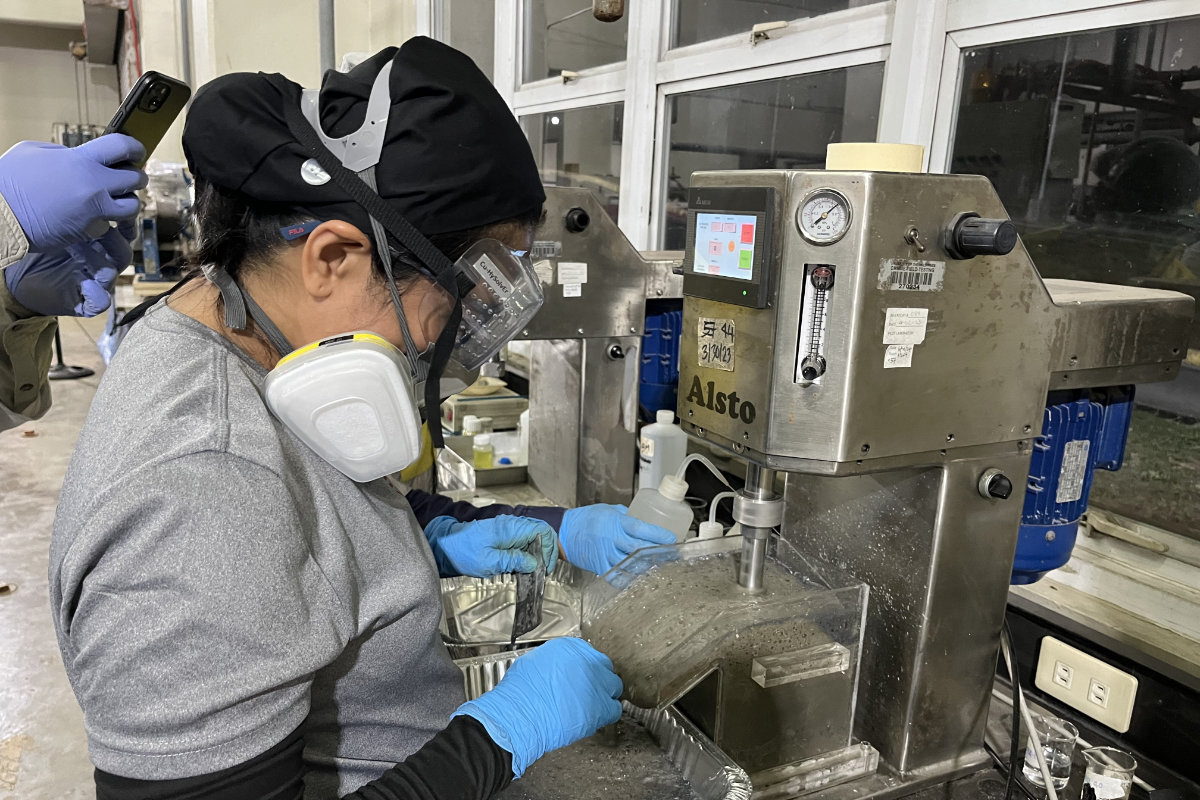
Tests confirmed that uraninite is the main uranium-bearing mineral in the material examined. The sampled zone was about half a meter wide, and researchers collected 180 kilograms of material for analysis. Microscopy, X-ray diffraction and advanced elemental analysis also showed minerals containing copper and molybdenum, along with iron-bearing magnetite.
The team developed a laboratory process to concentrate the material, which the PNRI said “can be processed into a product with higher uranium content.”
“This finding is an important step toward further research on producing uranium concentrate, commonly known as ‘yellowcake,’ an intermediate material used in the nuclear fuel cycle,” the PNRI said.
Size of the deposit unknown
The PNRI said the study covered only surface deposits. “Because the present work examined only surface manifestations, it does not establish the depth of the deposit, how thick it is, or how deep and widespread the uranium-bearing zones are,” the agency said.
Determining whether Larap holds enough uranium to be economically significant would require detailed geological, radiometric and geophysical surveys, followed by systematic drilling and analysis of drill cores, the researchers said. The PNRI said institutions and investors could help support the “full-scale exploration of what lies underground.”
If drilling confirms a significant resource, further studies would assess mining and processing economics, environmental and radiological effects, regulatory requirements and community considerations before any development, the PNRI said. The agency added that the work does not mean the Philippines is ready to produce its own nuclear fuel. It said the study shows Filipino scientists can now develop methods to concentrate a potential uranium resource.
Nuclear plans and critical minerals
The Philippine Energy Plan targets at least 1,200 megawatts of nuclear capacity by 2032, the PNRI said. The Philippine Star reported a further target of 2,400 megawatts by 2035. The Department of Energy has identified seven potential nuclear sites in five provinces: two in Bataan, two in Palawan, and one each in Masbate, Pangasinan and Camarines Norte. It is exploring financing options and aims to add 1.4 gigawatts of nuclear capacity within 12 years.
In August, President Ferdinand Marcos Jr. signed Executive Order No. 122, which creates a national framework for the critical minerals industry, covering investment, local mineral processing, value addition and downstream industries. The government is still finalizing the official Critical Minerals List, and the PNRI said the study does not assume that any of the resources examined will be classified as critical minerals.
The study was funded through the DOST’s Grants-in-Aid Program under the NuCycle Program-NuMER Project.
The PNRI said the next question for the Larap mine is: “What lies beneath the surface, and is there enough of it to justify the next stage of exploration?”