



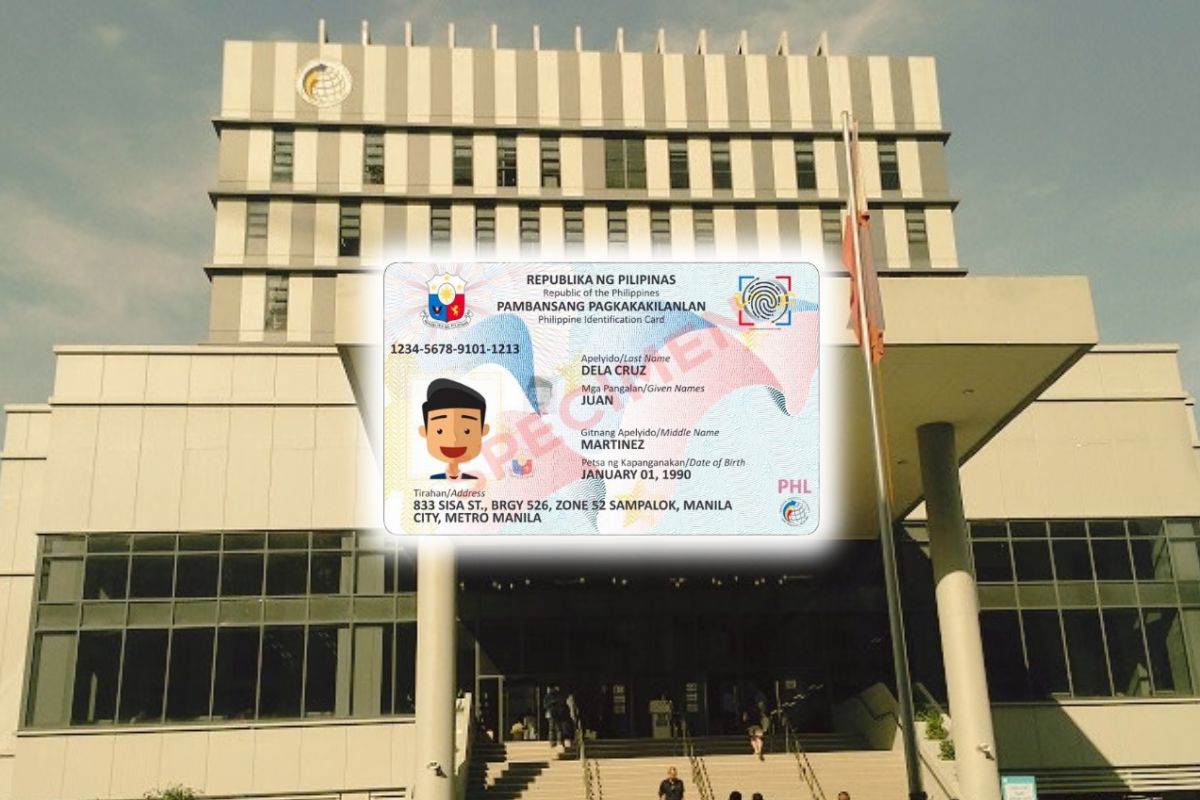
The government has approved a ₱2.48-billion public-private partnership (PPP) to upgrade and operate the national identification system, the Philippine Statistics Authority said this week. The Philippine Digital National Identity (PDNI) project cleared the Investment Coordination Committee-Cabinet Committee, chaired by the Department of Finance and co-chaired by the Department of Economy, Planning and Development.
A single private partner will now handle PhilSys registration, card production, authentication, and the system’s core IT infrastructure under one long-term concession. This departs from the government’s previous approach of awarding separate contracts for each component, an arrangement that broke down with its last card supplier.
The project now moves to procurement. Because it originated as an unsolicited proposal from Unisys Public Sector Services Corp., the government must conduct a competitive challenge: other firms may submit offers before the fourth quarter of this year, and Unisys retains the right to match the best rival bid.
The winning proponent will operate under a build-transfer-operate arrangement, covering a 20-year concession following a six-month transition period. The scope includes registration, card production, authentication services, technical onboarding, and the integration of private-sector “relying parties” – banks, telcos, and other entities that verify identity through PhilSys.
The project follows a difficult stretch for the national ID program. PhilSys launched in 2018 to provide every Filipino with a single national identification system, but card production has remained its persistent weakness.
In 2024, the Bangko Sentral ng Pilipinas terminated its contract with All Card Inc. after the supplier delivered only 57.9 million of the 116 million cards it was contracted to produce. The BSP placed the resulting loss at roughly ₱1.06 billion, close to half the value of the ₱2.1-billion contract.
The PSA has said the government remains obligated under the law to deliver physical cards to registrants. In the meantime, the printed ePhilID and digital national ID remain valid forms of identification.
Bidding closes by the fourth quarter of 2026, after which the government will award the concession to Unisys or to a competitor that submits a stronger offer.