



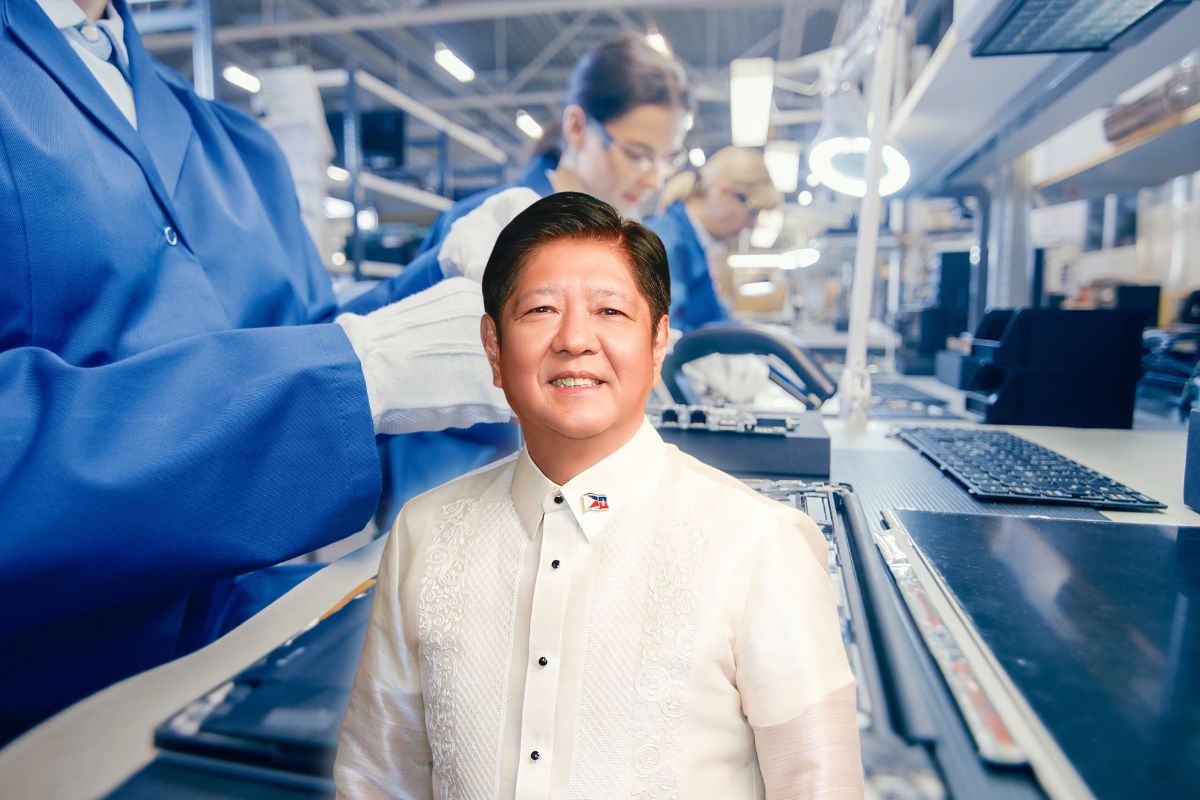
President Ferdinand R. Marcos Jr. described the Pax Silica initiative as a “good deal” for the Philippines, saying the country would support arrangements that promote investment and economic growth regardless of which nation they come from.
Pax Silica is a proposed high-tech manufacturing and innovation hub under the Luzon Economic Corridor, planned for New Clark City. The initiative is intended to position the Philippines as a participant in global supply chains for semiconductors, artificial intelligence, and critical minerals. Once fully developed, it could draw between $40 billion and $70 billion in investments and generate up to 190,000 jobs, according to project estimates, creating openings for Filipino engineers, researchers, and computer science graduates.
Speaking at a presidential luncheon hosted by the Foreign Correspondents Association of the Philippines at the Diamond Hotel Philippines in Manila, Marcos said the government does not treat investment as a choice between countries.
“Whenever someone is interested to come into the Philippines to invest, so long as it is to the mutual benefit of all parties involved, that for us is a good deal. And it is a good deal that we will enter into, no matter where it comes from,” Marcos said.
He said the Philippines would welcome collaboration with the United States, European countries, China, Japan, South Korea, Canada, and Australia, adding that the government’s priority is ensuring investments benefit Filipinos through job creation, skills development, technology transfer, and training.
“And so long as we are able to move the economy forward and to better the lives of our people, then that is something that we will certainly examine,” he said. “And if it turns out that that is a beneficial agreement or arrangement, then certainly we will become part of it.”
On mineral resources, Marcos said his administration would not allow other countries to extract Philippine minerals without a formal agreement, pointing to the potential for local processing of resources such as nickel so that more of the value generated stays within the country.
“This provides us an opportunity to start the processing in the Philippines,” he said. “Now, to be able to do that, you have to develop a processing center. You have to provide a power for that processing center. And if you cannot do it yourself, you do it in partnership with either a purely commercial venture or a G2G (government-to-government) arrangement or some hybrid arrangement.”
No timeline for the start of construction or a list of confirmed investor commitments for Pax Silica has been released.