



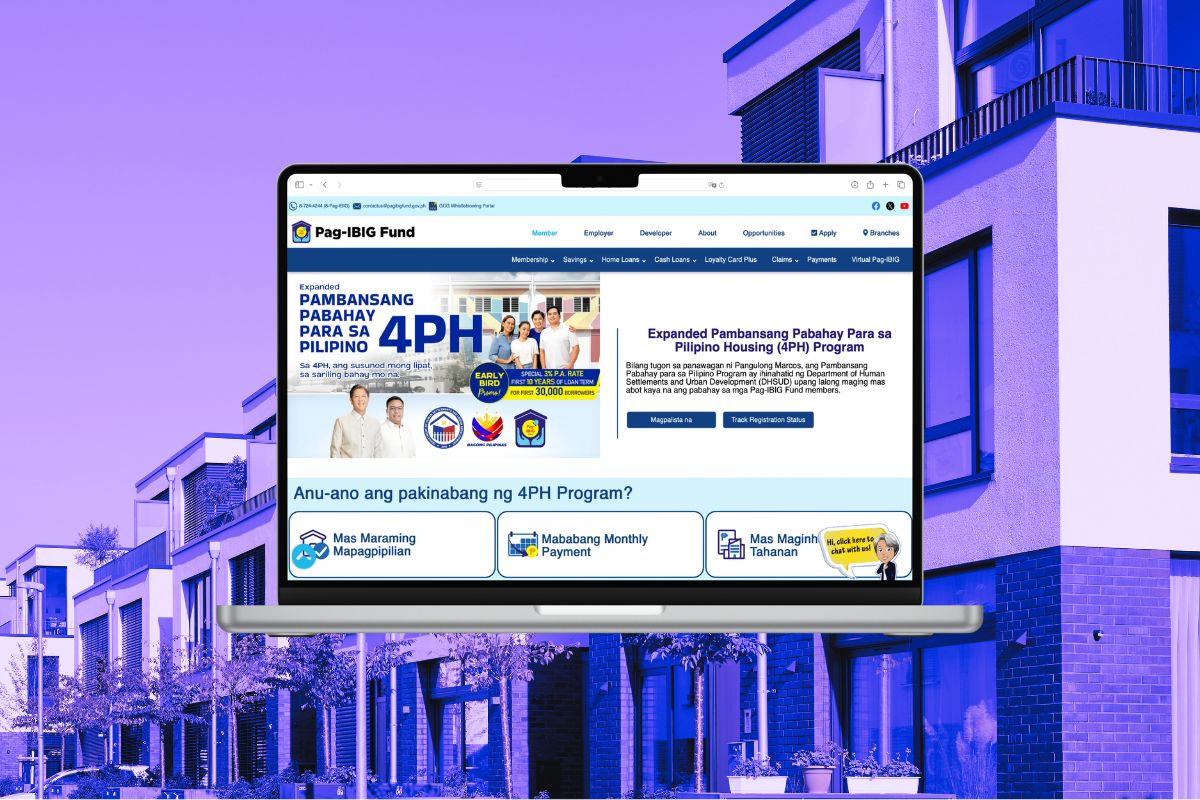
If you have been renting for years while property prices continue to climb, the 4PH housing program is probably the answer to your prayers. It’s the flagship housing program of the Marcos administration, and it allows qualified Pag-IBIG members to purchase a house and lot (or a condominium unit) at a subsidized interest rate.
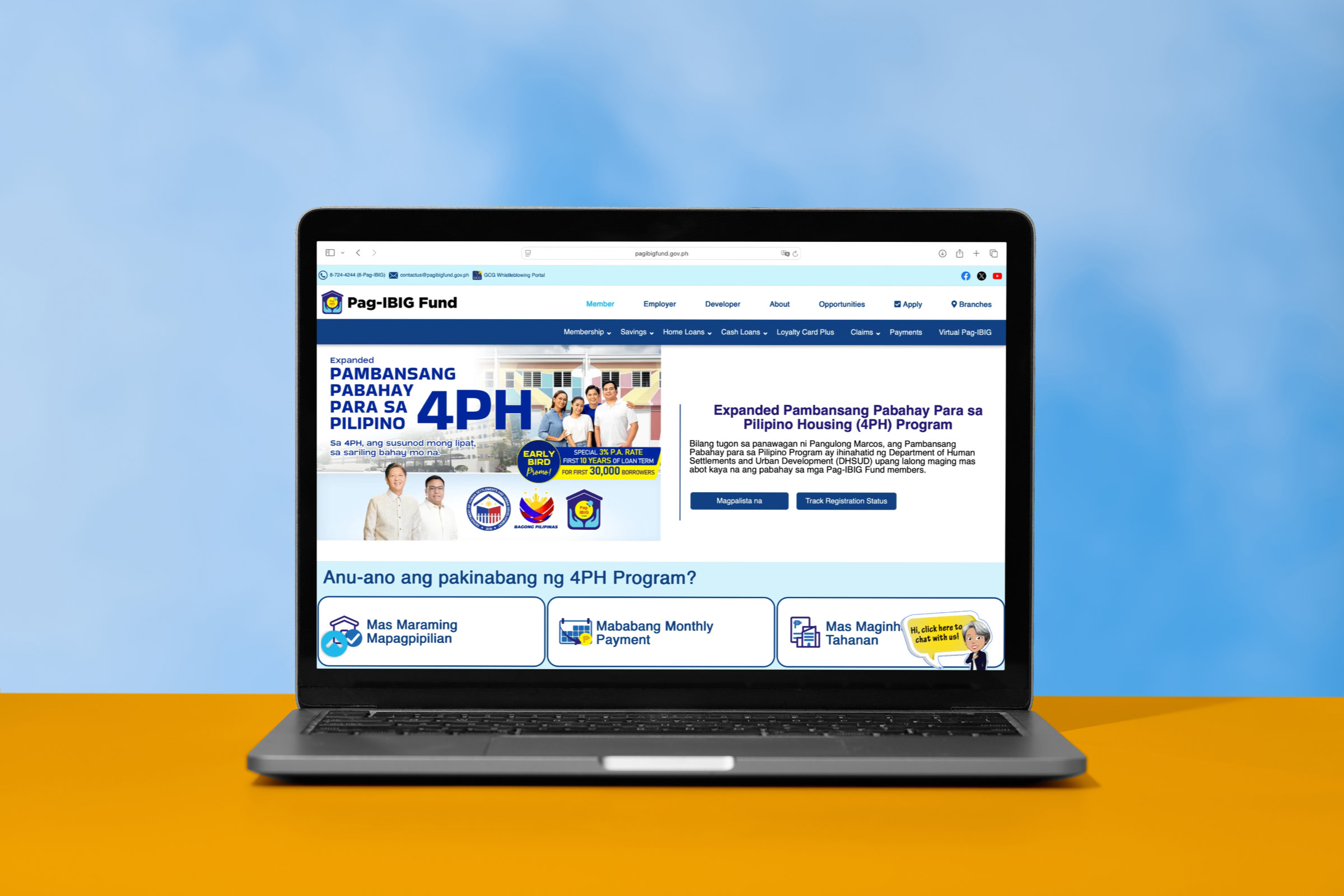
The program has also changed since it was first announced. What began as an LGU-endorsed beneficiary list has since become the Expanded 4PH, with online registration through Pag-IBIG, a wider property list that now includes acquired assets, and a promotional rate for early applicants.
This definitive guide covers who qualifies, what documents to prepare, how to register, and what the loan costs over time. All facts and figures come from the official Pag-IBIG Fund program website and recent government announcements, verified in August 2026.
Disclaimer: Tech Pilipinas and the author of this article are not affiliated with, endorsed by, or officially connected to Pag-IBIG Fund (Home Development Mutual Fund), the Department of Human Settlements and Urban Development (DHSUD), or the Pambansang Pabahay Para sa Pilipino (4PH) Program. This article is intended for general informational purposes only and does not constitute official guidance. Readers should verify all program details, requirements, and figures directly through the official Pag-IBIG Fund website (pagibigfund.gov.ph) or an authorized Pag-IBIG branch before making any decisions or submitting any application.
Table of Contents
What is the 4PH Housing Program?
The Pambansang Pabahay para sa Pilipino (4PH) Program is a national housing program administered by Department of Human Settlements and Urban Development (DHSUD) in partnership with the Pag-IBIG Fund, local government units, and private developers. Its objective is to close the country’s housing gap, which is estimated at roughly 6.5 million units.
Most 4PH projects are built vertically rather than as low-density subdivisions, since the program favors in-city housing over relocation to distant provinces. Units begin at a minimum of 22 square meters, and buildings range from four-floor walk-ups to high-rises of ten floors and above.
Financing is provided through a Pag-IBIG housing loan at a subsidized interest rate. The program is not a housing giveaway. It offers a loan on considerably better terms than the open market, with the subsidy applied to the interest rather than the purchase price.
Who Qualifies for the 4PH Housing Program?
To qualify for a Pag-IBIG loan under the Expanded 4PH program, an applicant must meet the following criteria:
- First-time homebuyer and first-time 4PH beneficiary.
- Gross monthly income below ₱47,855.82 for those working in Metro Manila, or below ₱34,685.82 for those working outside it.
- Active Pag-IBIG member with at least 12 months of contributions.
- No older than 65 at the time of application, and no older than 70 by loan maturity.
- Has the legal capacity to own and mortgage real property.
- No prior Pag-IBIG housing loan that was foreclosed, cancelled, or surrendered.
- Current standing on any existing Pag-IBIG Short-Term Loan.
Applicants must also pass Pag-IBIG’s standard background and credit checks.
Overseas Filipino Workers are subject to an important exception: they qualify regardless of income. This exception is frequently omitted from summaries of the program.
DHSUD’s original 4PH materials specify 24 months of Pag-IBIG contributions, while the current Expanded 4PH website specifies 12 months. Applicants uncertain which requirement applies to their case should verify with the Pag-IBIG branch handling their chosen project.
For Applicants Without 12 Months of Contributions
Pag-IBIG allows members to pay the equivalent of 12 monthly contributions in a single lump sum. Members who have been contributing but have not yet reached 12 months may pay the shortfall in one transaction rather than waiting for it to accrue.
Documents Required for Application
The published requirement list consists of four items:
- Two copies of the completed Housing Loan Application Form.
- Proof of income, in the format applicable to the applicant’s employment status: locally employed, self-employed, or OFW.
- One valid ID from Pag-IBIG’s accepted list.
- A completed Health Statement Form.
Proof of income is the requirement most likely to delay an application. Employed applicants are generally asked for a Certificate of Employment and Compensation along with recent payslips. Self-employed applicants must provide business registration documents and income records.
OFWs typically require employment documents that are consularized or apostilled. Applicants should confirm the exact list with their developer or Pag-IBIG branch before preparing the documents, as the requirements may change over time.
The complete list of documentary requirements is available on the Pag-IBIG 4PH website.
How to Apply for the 4PH Housing Program Online
Registration previously required a visit to the applicant’s barangay or LGU. Nowadays, it’s no longer necessary as applications are now being accepted online.
Pag-IBIG Fund CEO Marilene C. Acosta stated that the online system was designed to improve transparency and ensure that units are allocated where they are most needed.
Follow these steps to apply for the 4PH housing program online:
- Go to the Pag-IBIG 4PH Program website at pagibigfund.gov.ph/4PH_Program.html.
- Review the qualifications and requirements listed on the page.
- Click Magpalista na.
- Select a preferred housing project from the list of available options.
- Click Magpalista na again to proceed to the registration form.
- Complete the form, including a working mobile number, as the pre-qualification result is sent via SMS.
- Submit the form and record the 4PH Tracking Code that appears on screen.
- Use the tracking code with Track Registration Status to monitor the application at any time.
Applicants who are pre-qualified receive an SMS notification. From there, the applicant may proceed directly to the developer’s office to begin the housing loan application, or wait for the developer to initiate contact.
As of this writing, projects were listed by location rather than by developer, so you may try reviewing several nearby cities before selecting one. The page also includes a Match Me with a Home tool. Where no 4PH project is yet available in a given area, this tool matches the applicant against Pag-IBIG Acquired Assets within the applicable price ceiling.
Registration does not guarantee approval. Every submission is subject to evaluation by DHSUD and the Pag-IBIG Fund.
How Much You Can Borrow and How Long You Have to Pay
The loanable amount covers the property price, within the applicable price ceiling, along with estate management fees, related costs such as insurance, and up to ₱100,000 for home upgrades.
Pag-IBIG approves whichever figure is lowest among the following: the applicant’s actual need, the requested loan amount, the amount supported by repayment capacity, or the amount permitted by the property’s appraised value.
In practice, repayment capacity most often determines the outcome, which is why maintaining current standing on any Short-Term Loan matters as much as meeting the income ceiling.
Loan terms of up to 30 years are available, though repayment cannot extend beyond the borrower’s 70th birthday. An applicant who is 50 at the time of application is therefore limited to 20 years in practice.
Interest Rates and the Early Bird Promo
The subsidized rate is 3 percent per annum for the first 5 years of the loan, extendable for another 5 years for applicants who remain income-qualified.
Under the Early Bird Promo, the first 30,000 borrowers receive the 3 percent rate for a full 10 years instead of 5. Based on the most recent government announcements, this promo remains in effect, which makes early registration worthwhile where a project is already open in the applicant’s area.
Once the subsidized period ends, the rate reprices according to Pag-IBIG’s standard framework. This should be factored into any household budget in advance. A payment that is manageable at 3 percent can increase considerably once the loan reprices, and the subsidy does not apply again.
Earlier figures of 5 percent for regular borrowers and 3 percent for minimum wage earners may still appear in older coverage. Those reflected the terms at the program’s launch in mid-2025. The current Expanded 4PH uses the flat 3 percent structure described above.
Where to Pay Your Monthly Amortization
Once a loan is approved, payment may be made through salary deduction, the Virtual Pag-IBIG app or website, an auto-debit arrangement with a bank, any Pag-IBIG branch, post-dated checks, or accredited partner outlets.
Salary deduction or an auto-debit arrangement is generally the more reliable option. Both remove the risk of a missed due date, and a clean payment record protects the borrower should restructuring become necessary.
Frequently Asked Questions
Is the 4PH housing program free?
No. The 4PH housing program is a subsidized housing loan rather than a giveaway. Borrowers still have to pay monthly amortization over a term of up to 30 years. The government subsidizes the interest rate, set at 3 percent during the subsidized period rather than the standard market rate.
Can OFWs apply for the 4PH housing program?
Yes. OFWs qualify for the 4PH housing program regardless of income, unlike locally employed or self-employed applicants, who must remain under the income ceiling. OFWs must still meet the remaining requirements: first-time homebuyer status, 12 months of Pag-IBIG contributions, age limits, and a clean housing loan history. Proof of income documents for OFWs typically require consularization or apostille.
What is the income limit for the 4PH housing program?
The income limits are set at below ₱47,855.82 a month for those working in Metro Manila, or below ₱34,685.82 for those working outside it. This refers to gross income, not take-home pay. OFWs are exempt from this limit.
Do I need to visit my barangay or LGU to apply?
No, not for the loan application itself. Pag-IBIG moved registration online in mid-2025, replacing the previous barangay and LGU walk-in process. Applicants now register directly at pagibigfund.gov.ph/4PH_Program.html and receive a tracking code. LGUs will continue to assist in identifying housing sites and endorsing beneficiaries at the project level, but a visit is no longer required to register.
How long does pre-qualification take, and what if no SMS is received?
Pag-IBIG has not published a fixed processing time. If no SMS arrives, this should not be taken as a rejection. Applicants should check their status using the 4PH Tracking Code on the Track Registration Status page and confirm that the mobile number provided is correct and active.
What happens to the interest rate after the subsidy ends?
The rate reprices according to Pag-IBIG’s standard framework. The 3 percent subsidized rate applies for 5 years, extendable to 10 years for income-qualified borrowers, or for a full 10 years for those among the first 30,000 Early Bird borrowers. After that period, the standard rate applies for the remainder of the term.
What if my income is slightly above the 4PH income ceiling?
The applicant will not qualify for the Expanded 4PH’s subsidized rate. The ceilings are applied strictly, so an income only marginally above the limit still disqualifies an applicant. A regular Pag-IBIG housing loan remains available, at a higher rate than 3 percent but typically still lower than bank financing.
Can I apply with an outstanding Pag-IBIG Short-Term Loan?
Yes, provided the account is current and not in arrears. An overdue Short-Term Loan can result in a declined application, and settling it afterward does not automatically reinstate an application that has already been rejected on that basis. It should be settled before registration.
What if there is no 4PH project in my city?
The Match Me with a Home tool on the Pag-IBIG website checks Pag-IBIG Acquired Assets within the price ceiling, so applicants are not limited to cities where a developer has already broken ground. As of the latest updates, active projects in Metro Manila are located in Manila, Quezon City, San Juan, and Caloocan, with several other cities having signed agreements with DHSUD to join.
How can I verify that a call about my 4PH application is legitimate?
Pag-IBIG’s official Telesales numbers are 0919-912-8241, 0919-912-7351, 0919-912-8314, and landline (02) 8834-8071. Any other number should be treated as suspicious. An OTP or bank details should never be shared over the phone, and unlisted numbers should be reported. No legitimate Pag-IBIG representative requests a fee to expedite an application.
Final Thoughts
The 4PH housing program gives low-income Filipinos the opportunity to finally own a home, at interest rates lower than what banks and private lenders offer. A household that has spent years paying rent, with little prospect of ever affording a housing loan, can find in the 4PH program a realistic path to ownership, particularly under the Early Bird Promo’s ten-year subsidized rate.
That opportunity still depends on preparation. Every application passes through DHSUD and Pag-IBIG evaluation, and the interest rate reprices once the subsidized period ends. Applicants should make sure they have at least 12 months of contributions, clear any outstanding Short-Term Loan, and register while Early Bird slots remain available.
If you have any questions and concerns about the Expanded 4PH housing program, you may contact Pag-IBIG Fund at 8-724-4244 (8-Pag-IBIG) or email [email protected].