


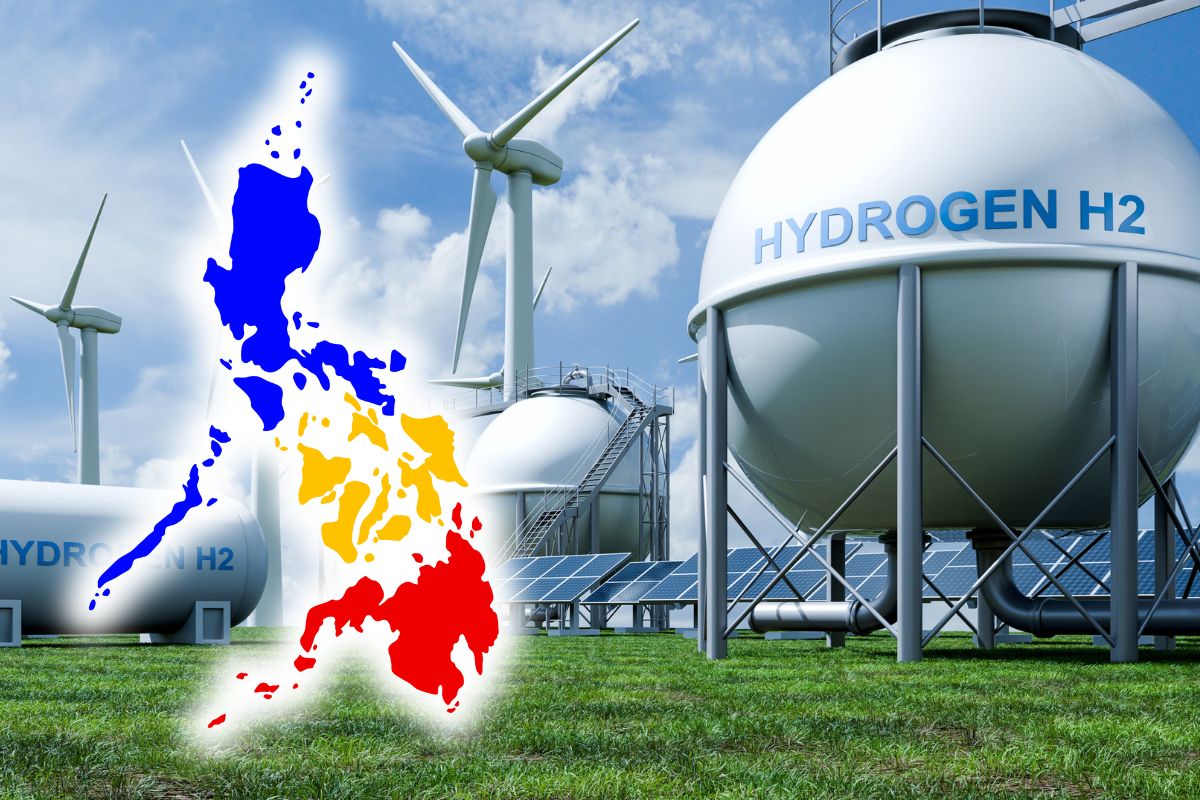
The Philippines may hold the largest deposits of naturally occurring hydrogen on the planet, and a U.S. exploration company backed by Bill Gates and Amazon is betting that the country could become the first place in the world to turn that resource into a commercial fuel supply.
Koloma, which has raised $400 million from investors including Gates’ Breakthrough Energy, Amazon, and Mitsubishi Heavy Industries, has spent the past year expanding its footprint in the Philippines under a series of government exploration deals, according to a report from Oilprice.com.
President Ferdinand Marcos Jr. has already signed three service contracts granting the company exclusive rights to explore more than 4,100 square kilometers across Central Luzon and western Zambales, following what the Department of Energy has called the world’s first competitive bid round for natural hydrogen exploration, held in October 2025. Fieldwork is already underway in Bugallon, Pangasinan, and parts of Zambales.
The timing matters for a country that imports nearly all of its fuel. The Philippines burns roughly 33 million liters of diesel a day, and when the war in the Middle East disrupted shipping earlier this year, diesel prices briefly topped ₱130 a liter and the country’s oil reserves fell to a 45-day supply.
Geologic hydrogen, also called natural or white hydrogen, forms underground and can be extracted without the energy-intensive industrial processes used to make green or gray hydrogen. The U.S. Department of Energy estimates it could be produced for less than $1 per kilogram, compared with an estimated $3.50 to $6.00 per kilogram for green hydrogen made using renewable electricity.
“The Philippines has the largest natural hydrogen seeps anywhere on the planet,” Koloma CEO Pete Johnson told Forbes. “We have reason to believe that these seeps are connected to very large accumulations.”
Johnson has pointed to the country’s power mix as part of the appeal, noting that much of its incremental electricity still comes from burning diesel, an alternative hydrogen could eventually undercut on cost. Koloma plans to invest up to $9 million, or roughly ₱554 million, to bring the Central Luzon project to the drilling stage by the end of the year.
Commercial-scale production, however, remains years off. Johnson has cautioned against rushing the science, saying the company has confirmed hydrogen purity above 90% at the surface but has not yet proven a field is large enough to develop commercially. “We’re not sitting on something that’s big and commercial yet,” he said. Confirming whether the Zambales site can support extraction at scale is expected to take at least two more years.