



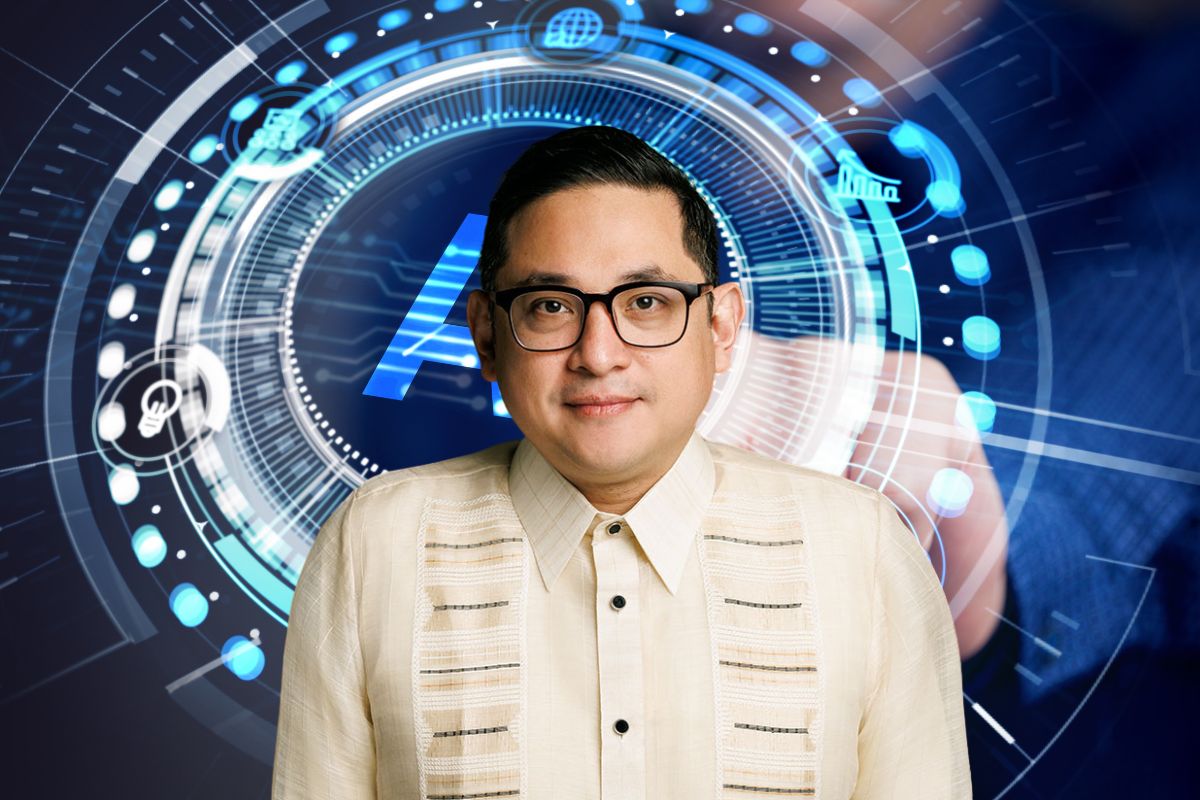
Sen. Bam Aquino called on the government Wednesday to develop a Filipino-made artificial intelligence (AI) model, warning that the country’s growing dependence on foreign AI systems could gradually influence Filipinos’ culture, language and worldview.
Aquino raised the issue during the Senate committee on finance’s budget hearing on the 2027 spending plan of the Department of Science and Technology (DOST), pointing to the widespread use of foreign-developed platforms such as ChatGPT, Claude and Gemini among Filipino users.
“As you keep on using the AI, you’re training the AI, but the AI is also training you and a lot of the time, the output that it’s giving you is from the perspective of the creators of the AI,” Aquino said.
He said unchecked reliance on foreign AI tools could lead to a gradual shift in local norms over time. “So if we’re not careful, and our countrymen, our youth, are all using AI coming from other countries, eventually there will be a type of assimilation of culture, language, and mores, and norms,” he added.
As an example, Aquino noted that a Chinese-developed AI model would likely present a different perspective on the South China Sea – referred to domestically as the West Philippine Sea – compared with a Filipino-built system.
DOST Secretary Renato Solidum Jr. told the committee that the agency is already developing a locally made large language model (LLM). He said a newly approved program will cover not only major Philippine languages but also less widely spoken ones.
Dr. Franz De Leon of the DOST’s Advanced Science and Technology Institute also presented “Itanong,” an AI chatbot that processes queries in Filipino, English and Taglish within a private, closed environment.
Aquino cited potential uses for such a chatbot in government services, suggesting that a Filipino-made AI model could eventually be integrated into e-government platforms to help citizens navigate government processes, permits and other transactions.
Asked about DOST’s role in the country’s broader AI development strategy, Solidum said the agency leads national AI efforts through research, operations and talent development, while other agencies handle related components. The Department of Information and Communications Technology (DICT) oversees infrastructure and connectivity, while the Department of Economy, Planning and Development (DepDev) is responsible for AI governance and policy.
Solidum added that the Technical Education and Skills Development Authority (Tesda), together with the Department of Education and the Commission on Higher Education, will also take part in developing the workforce needed to support the country’s AI initiatives.
The budget hearing forms part of the Senate’s review of DOST’s proposed 2027 allocation, which will determine funding levels for the agency’s AI development programs going forward.