


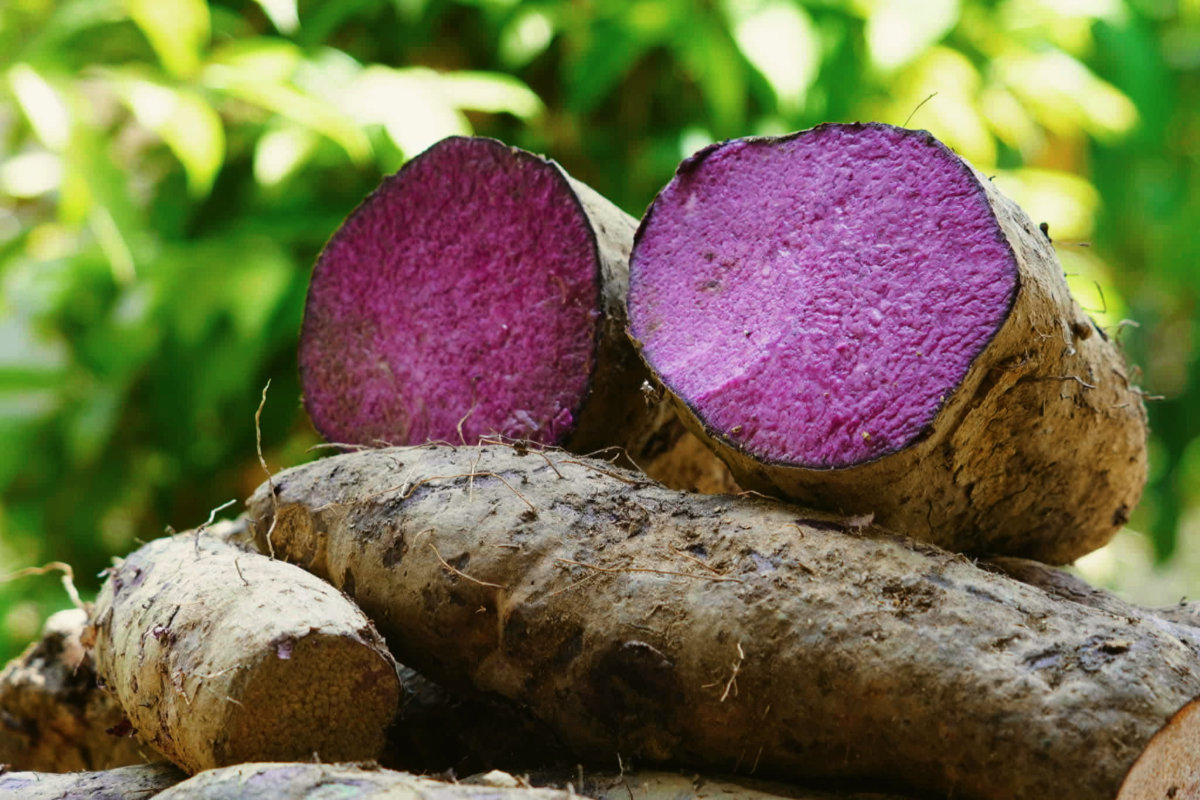
An ube industry group is asking the Department of Agriculture (DA) to strictly enforce the ban on fresh purple yam exports. It says neighboring countries are growing Philippine ube varieties while the Philippines earns only $3 million from a global market valued at about $595 million.
Chester Velasquez, president of the United Ube PH Federation, gave the figures on One News’ “The Big Story” on Saturday, October 24. He said the $595 million valuation is as of 2025. “We’re not the number one exporter of ube. That’s the sad reality,” Velasquez said.
At the ₱63.95-per-dollar rate reported on October 26, the global market is worth roughly ₱38 billion. The Philippine share comes to about ₱192 million, or around 0.5 percent. The United States is the largest buyer of Philippine ube products, taking nearly half of the country’s exports.
The suspension covers fresh ube only. Processed products such as ube powder, extract and halaya can still be exported. Velasquez said the DA should enforce the ban more strictly because fresh ube is easy to smuggle.
He said China and Vietnam have been importing fresh ube and growing it themselves, with Vietnam especially aggressive. He also described what he called food fraud: ube grown in China or Vietnam being sold as Philippine ube.
Shortage of planting materials
Problems at home are also slowing production. Velasquez said farmers lack planting materials, including seedlings, tubers, setts and tissue-cultured plants. Some farmers sell their entire harvest instead of keeping tubers for the next planting, which tightens supply further.
Prices are uneven as well. In Romblon, the federation met farmers selling ube for as little as ₱20 to ₱40 per kilo, and some were discouraged from planting again.
The federation is promoting contract-growing arrangements that guarantee buyers and agreed prices. In the setup Velasquez described, the agreed price holds if market prices fall and can be renegotiated if they rise. He added that the industry also needs organic, halal, HACCP and good manufacturing practice certifications to meet export-market requirements.
Funding and next steps
The U.S. Department of Agriculture recently announced a $34.1 million development award, roughly ₱2.2 billion at the same rate. TechnoServe, a US-based organization, will implement it, and it is expected to support 12,500 Filipino ube farmers over five years. A separate ₱300-million government initiative aims to double planting areas.
The federation was formed about three months ago. It brings together farmers, growers, processors, manufacturers, exporters, academe and government agencies to consolidate what Velasquez described as a fragmented industry.