


The Department of Science and Technology (DOST) will install water treatment and desalination systems in five communities in Eastern Visayas next year to address the region’s water crisis, as a strong El Niño continues across the Philippines.
The Safe Water Treatment System (SafeWaTrS) and Water Desalination Technology projects will cover five communities during the first year of rollout, DOST Eastern Visayas Regional Director John Glen Ocaña said in a phone interview on Monday.
The state weather bureau, DOST-PAGASA, first raised an El Niño Alert on April 22. In a Sept. 23 climate advisory, it said the phenomenon is expected to reach a very strong level between September and December 2026 and last through the first half of 2027. The advisory said long periods of below-normal rainfall raise the risk of water supply stress.
In August, PAGASA reported significantly drier-than-normal conditions in parts of Central and Eastern Visayas, among other areas. PAGASA had earlier warned that dry spells or drought conditions may occur from October to December.
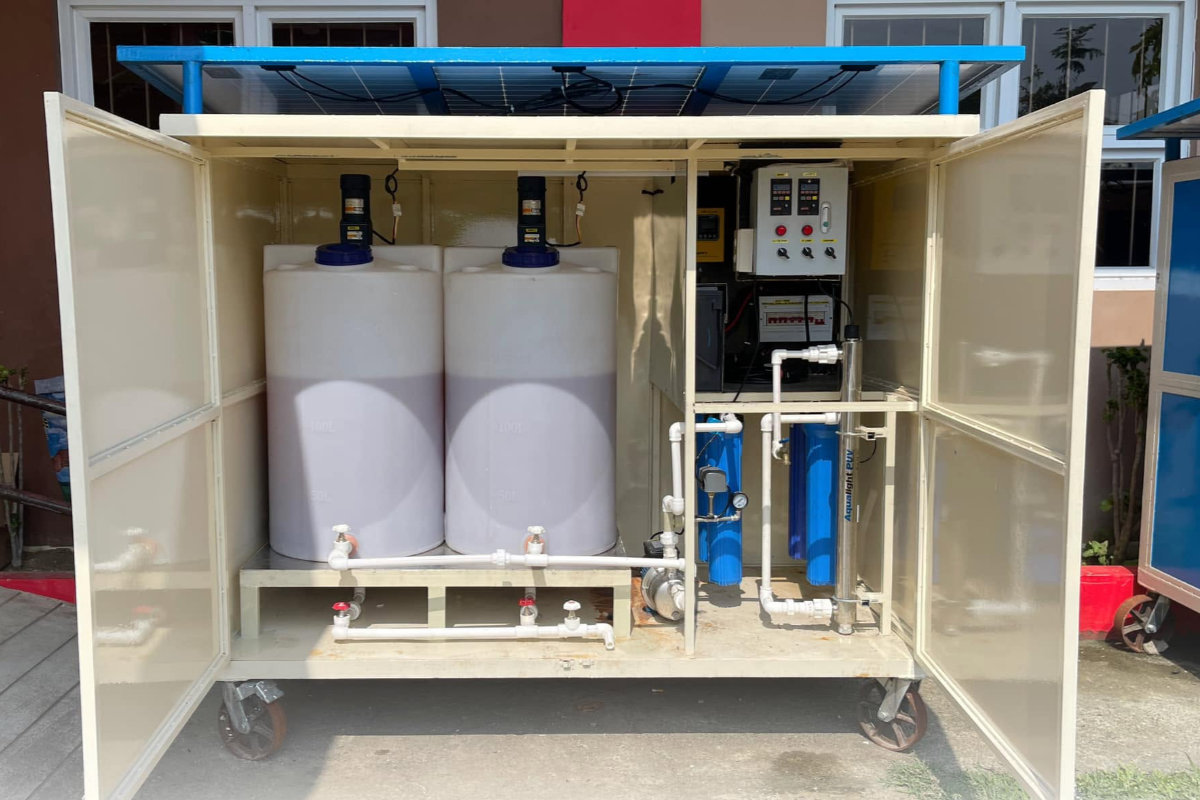
The SafeWaTrS technology will be installed in selected communities in Tacloban City, the regional capital, and Borongan City, the capital of Eastern Samar province. The system turns dirty freshwater into safe drinking water.
The unit was developed by the DOST-Industrial Technology Development Institute (DOST-ITDI). It is a compact, mobile and decentralized water treatment solution designed for immediate deployment in underserved and disaster-prone communities.
Ocaña described the unit’s capacity and power supply.
“With a production capacity of up to 2,000 liters per day, the unit operates primarily through an integrated solar power subsystem, enabling independent functionality from centralized electrical infrastructure and ensuring operational continuity during power disruptions and climate-related emergencies,” Ocaña said.
The Water Desalination Technology will be set up in the towns of Almagro, Samar; Hinunangan, Southern Leyte; and Naval, Biliran. The system, also developed by DOST-ITDI, converts seawater and brackish water into potable water for coastal and island communities.
According to Ocaña, the technology has a treatment capacity of around 40 liters per hour and follows a modular design. Additional reverse osmosis modules can be installed to increase production based on community demand.
The projects will cost ₱500,000 each. DOST described the rollout as its measure to mitigate the impact of Super El Niño in the country.