


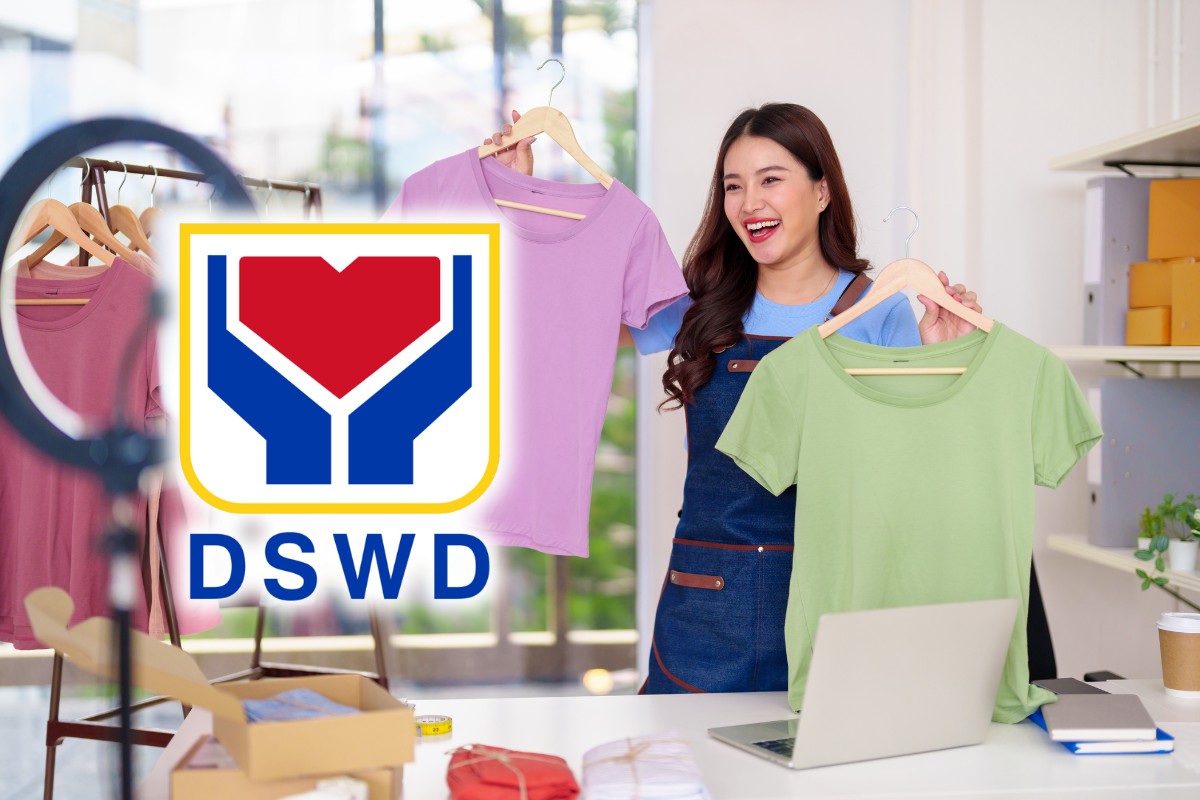
The Department of Social Welfare and Development (DSWD) is offering livelihood assistance of up to ₱10,000 to qualified poor, vulnerable, and marginalized Filipinos under its Sustainable Livelihood Program (SLP), including support for beneficiaries who want to start or grow an online selling business.
The program has drawn renewed attention as e-commerce and social media selling become a more common source of income for Filipino households. Under the SLP, the assistance is not limited to online selling. Beneficiaries can also use the seed capital for sari-sari stores, food vending, farming, fishing, and other small enterprises, depending on their approved livelihood plan.
Assistance under the SLP is not a fixed cash handout. The amount depends on the applicant’s approved livelihood proposal, an assessment by DSWD, and the availability of program funds. Beyond seed capital, qualified beneficiaries also receive business and financial literacy training, business development support, and mentoring. DSWD said participation in the screening process does not guarantee approval.
Eligibility is limited to individuals or families identified as poor, vulnerable, or marginalized. Some Pantawid Pamilyang Pilipino Program (4Ps) beneficiaries and other qualified applicants may also be included, based on DSWD’s assessment. All applicants must go through screening and validation by their local DSWD office.
The online selling component of the SLP has expanded through a partnership with TikTok Shop. In July, around 170 SLP beneficiaries in Valenzuela City received live-selling and content creation training alongside ₱10,000 in seed capital, under a program called “Kabuhayan Konek TikTok Edition SLP.” Social Welfare Secretary Rex Gatchalian said the rollout would continue in other areas. “Our goal is to expand it nationwide,” Gatchalian said, adding that the program would next move to Vigan, Ilocos Sur, then Iloilo, before reaching a city in Mindanao that has yet to be selected.
Applicants should also be cautious of unofficial Facebook posts claiming to offer DSWD cash assistance. DSWD and the Department of Information and Communications Technology (DICT) have repeatedly flagged fake accounts and posts using the agency’s name to solicit personal information or direct users to suspicious links. In one recent case, DICT ordered a takedown of a fraudulent DSWD-branded post found to contain malicious links. DSWD has said it does not select beneficiaries through text messages or private chat, and does not ask applicants for personal details or one-time passwords (OTPs) online.
Interested applicants are advised to apply only through their local DSWD field office or the agency’s official website, and to avoid submitting personal information through unverified links or Facebook pages.