


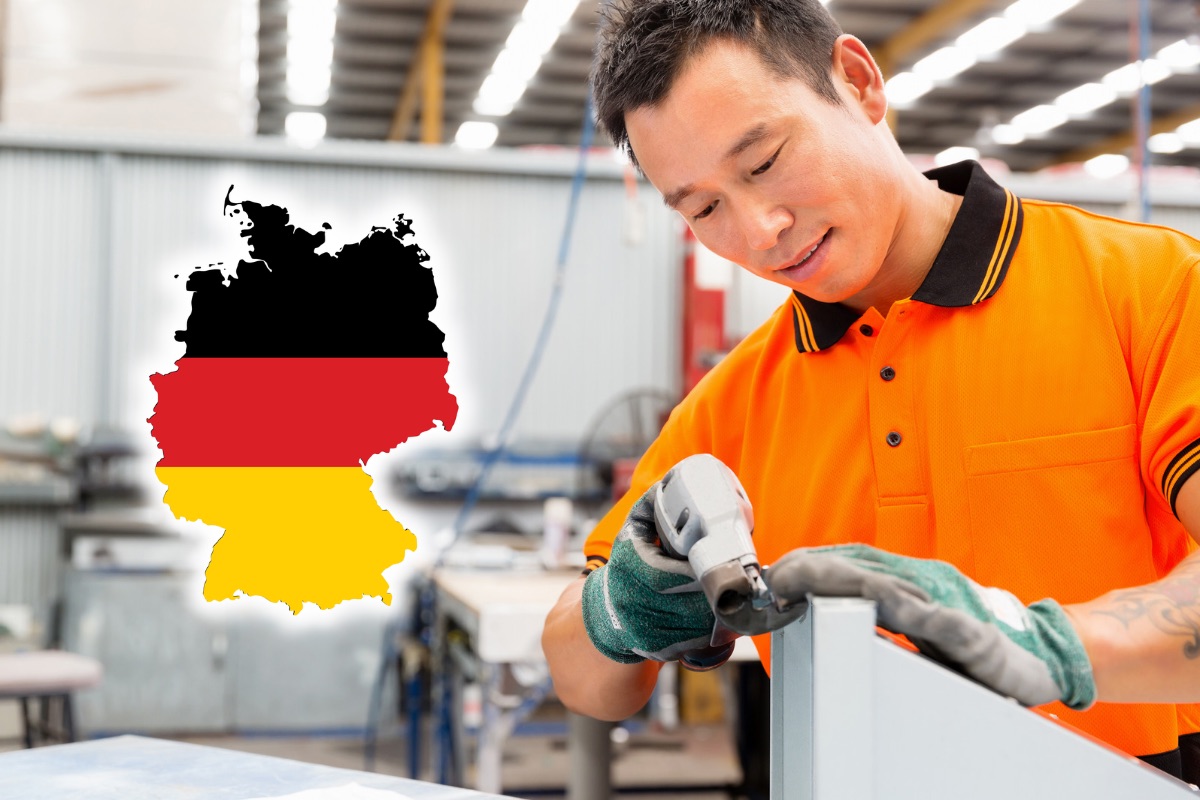
Filipino skilled workers can now enter Germany without a job offer under the Chancenkarte, also known as the Germany Opportunity Card. The permit was introduced by Germany in mid-2024 and lets qualified applicants enter the country, stay for up to 12 months, and look for a qualified job without an offer in hand.
The Chancenkarte is not limited to Filipinos. It is open to skilled non-EU workers from any country. Filipino workers should still read the rules carefully, because the scheme is selective and Germany awards the card on points and documents, not on nationality or sector alone.
In this guide, we’ll explain who qualifies for the Chancenkarte, how the points system works, and what you should do before applying. Applicants are advised to consult the German Embassy in Manila and the Federal Foreign Office before filing their application.
Disclaimer: Tech Pilipinas is an independent publication. It is not affiliated with, connected to, or endorsed by the German government, the German Embassy in Manila, the Department of Migrant Workers (DMW), or any other government agency. Tech Pilipinas is also not a recruitment agency and does not process visa applications, place workers in jobs, or collect fees for overseas employment. This article is provided for general information only and is not legal or immigration advice.
What is the Germany Opportunity Card?
The Chancenkarte is a residence permit that allows a skilled non-EU worker to live in Germany while looking for qualified employment. It is regulated under §20a of the Residence Act and launched on 1 June 2024 as part of the Skilled Immigration Act reform. The initial permit runs for up to 12 months.
A holder who later has a qualified job offer but does not yet meet the requirements of a work residence permit can extend the card once, as a follow-up Chancenkarte, for up to two more years. That follow-up card cannot be extended again.
Two Ways to Qualify
There are two ways to qualify for the Germany Opportunity Card, as follows:
- Direct route. If your degree is officially recognized in Germany, you can apply without collecting points, provided you also meet the financial requirements.
- Points route. Applicants must show English at B2 level or German at A1 level and earn at least 6 points under the Chancenkarte points system.
Both routes share the same baseline requirements, according to Jobbatical’s 2026 guide:
- Qualification: A university degree recognized in the country of origin or Germany, or at least two years of vocational training recognized by the issuing state. Recognition can be checked through the Anabin database or the IHK and ZAB portals.
- Language: German at A1 level or English at B2 level.
- Financial proof: At least €13,092 per year (about €1,091 per month) through a blocked account, a formal declaration of commitment (Verpflichtungserklärung), or a qualifying part-time job contract in Germany.
- Health insurance: Coverage equivalent to German public health insurance standards.
Requirements may change, so confirm the current amounts with the German Embassy in Manila.
How the Points System Works
The points system rewards factors that predict a smooth entry into the German job market. It weighs education, work experience, language skills, age, and ties to Germany.
| Category | Criteria | Points |
|---|---|---|
| Qualification comparability | Foreign qualification is partially recognized in Germany | 4 |
| Shortage occupation | Qualification in a field such as IT, engineering, health, teaching, or skilled trades | 1 |
| Professional experience | 2 years of relevant experience in the last 5 years | 2 |
| 5 years of relevant experience in the last 7 years | 3 | |
| Language skills | German A2 | 1 |
| German B1 | 2 | |
| German B2 or higher | 3 | |
| English C1 or higher | +1 bonus | |
| Age | Under 35 | 2 |
| 35 to 40 | 1 | |
| Previous stay in Germany | Legal continuous residence of at least 6 months in the last 5 years | 1 |
| Spouse or partner | Partner also meets Opportunity Card criteria | 1 |
Source for the table: Jobbatical’s 2026 HR guide.
A partially recognized qualification (4 points) plus the age bonus (2 points) already reaches 6, so applicants under 35 with partial recognition need little else. Others reach the threshold through combinations of experience, language, and shortage-occupation points.
Filipino applicants with nursing, hospitality, electrical, or other technical backgrounds should also check the official points grid for their own profile.
What the Chancenkarte Allows
Holders may search for work for up to one year, work part-time for up to 20 hours per week, and take trial work placements. Trial placements are capped at two weeks per employer. A holder who finds qualifying employment can switch to a skilled worker visa without leaving Germany.
The card is a job-search permit and not a work contract. Holders are expected to look for qualified employment during the stay, and part-time work is meant to support the search, not replace it.
What Filipino Applicants Should Prepare
The Chancenkarte does not replace the Philippine side of overseas employment. Filipinos who plan to work in Germany should keep the following in mind.
- Check qualification recognition. German authorities assess whether a Philippine degree or vocational certificate is recognized. Full recognition can place you on the direct route.
- Prove your language level. Obtain an English B2 or German A1 certificate before filing.
- Set up your finances. Arrange a blocked account or other accepted proof of funds.
- Apply through official channels. Filing is done through the German Embassy in Manila and Germany’s official immigration portal.
- Coordinate with the DMW. Workers who land a job in Germany also need DMW deployment clearance, which is processed alongside the visa.
Avoid agents who promise guaranteed jobs or fast visas. The Chancenkarte has no placement guarantee, and official application fees are published by the embassy.
How to Apply for the Chancenkarte From the Philippines
Filipino applicants must file their applications with the German Embassy in Manila. The embassy accepts visa applications only from residents of the Philippines, the Marshall Islands, Micronesia, or Palau, and only after an appointment has been booked.
- Check your eligibility. Confirm whether you qualify on the direct route or the points route. The Federal Foreign Office points applicants to the Make it in Germany self-check website for this.
- Confirm that your qualification is recognized. Check your degree or vocational certificate through the Anabin database or the IHK and ZAB portals. Some German missions state that applications with a qualification not recognized or not positively checked by the ZAB cannot be accepted.
- Get your language certificate. Obtain German A1 (for example, Goethe-Institut or Telc) or English B2 (for example, IELTS or TOEFL).
- Arrange proof of funds. Open a blocked account, secure a formal declaration of commitment, or hold a qualifying part-time job contract. The benchmark is €13,092 per year or €1,091 per month (approximately ₱933,000 per year or ₱78,000 per month).
- Prepare your documents. The usual list is a passport valid for at least six months, application forms, two biometric photos, proof of qualification, language certificates, financial proof, health insurance, and a CV. Jobbatical’s guide has the full checklist.
- Book an appointment. Use the appointment link in the embassy’s visa information page. The embassy doesn’t accept applicants without one.
- Attend in person. Applications must be submitted personally. Bring both originals and copies.
- Pay the fee and wait. One guide lists €75 for the national visa issued abroad and 3 to 5 months for processing. The embassy accepts the fee in Philippine pesos at the current exchange rate, according to an older embassy notice, and doesn’t issue a refund it if the application is rejected.
Frequently Asked Questions
Can a Filipino go to Germany without a job offer?
Yes. A Filipino who meets the Chancenkarte requirements can enter Germany to look for a job without a prior offer. The applicant must hold a recognized qualification or reach 6 points, show language ability, and prove financial means.
How long can I stay in Germany with the Opportunity Card?
The first permit lasts up to 12 months. A holder with a qualified job offer who does not yet meet the work-permit requirements can extend once for up to two more years.
Can I work while holding the card?
Yes, within limits. You may work up to 20 hours per week and take trial placements of up to two weeks with an employer.
Do I need to speak German?
Not necessarily. The points route accepts English at B2 or German at A1. Daily life and most employers will still reward German skills.
Is the Chancenkarte only for Filipinos?
No. It applies to qualified non-EU nationals generally. Filipinos use the same rules, points, and documents as other applicants.
Is there an age limit for the Opportunity Card?
No. There is no maximum age limit. Age only affects your points: 2 points if you are under 35, 1 point if you are 35 to 40, and none if you are over 40. Applicants over 40 can still qualify through the direct route with a fully recognized qualification, or by earning the 6 points through experience, language skills, and other categories.
Final Thoughts
For Filipino skilled workers, the Chancenkarte is a genuine opportunity. Until now, working in Germany usually meant finding an employer first, often through an agency, before a visa is issued. The Opportunity Card changed that. Qualified applicants can enter Germany, stay for up to 12 months, and look for work in person, working up to 20 hours a week and trying out jobs while they search.
The timing also favors Filipino applicants. Germany has recruited up to 6,000 Filipino nurses in recent years, and both governments have said they want a sustainable arrangement for skilled Filipino workers beyond health care. The Chancenkarte lets electricians, engineers, hospitality workers, and other skilled professionals pursue that demand directly, without waiting for a placement program.
The card is still a job-search permit and not a guaranteed job. It rewards applicants who prepare early: a recognized qualification, a language certificate, proof of funds, and a clear idea of which German employers hire in your field. Filipinos who start now have time to do that properly.