



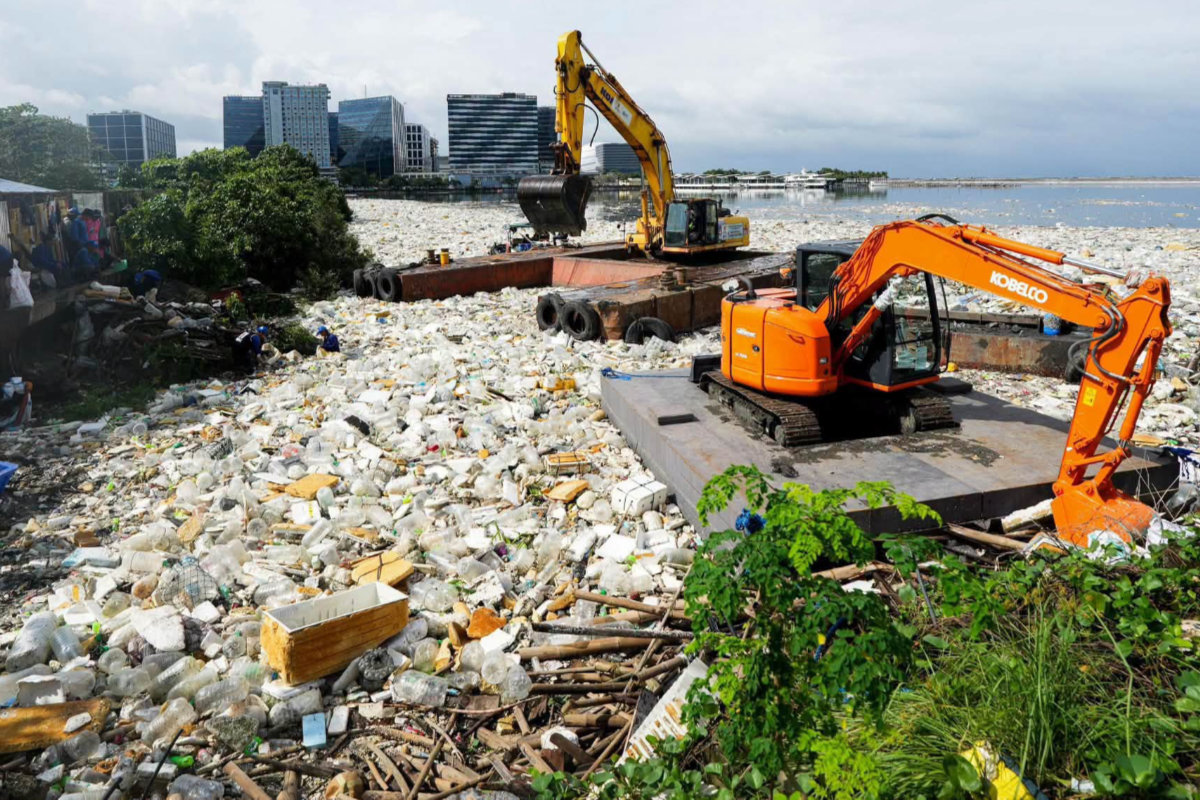
President Ferdinand R. Marcos Jr. is pushing waste-to-energy (WTE) facilities as what he called the “only solution” to the country’s garbage problem, a directive that has prompted the Department of Energy (DOE) to accelerate implementation of its WTE program.
Marcos made the statement during an inspection of clearing and waste collection operations at the Diokno Pumping Station in Pasay City on August 12, where he described the situation as a “critical garbage crisis.” He also visited the Redemptorist Water Channel along Baclaran River, where tons of trash were seen floating after a week of heavy rains in Metro Manila.
“‘Yan [waste-to-energy plants] ang tanging solusyon dahil ‘yung mga landfill puno na at pamahal na ng pamahal ang pagpapadala,” Marcos said. (That’s the only solution because the landfills are full and transporting waste to landfills is getting more expensive.)
The President said the government is already looking into potential locations for WTE facilities. “Ang ating iniisip, imbes na sa landfill dadalhin, dadalhin sa waste-to-energy plant. So tinitignan natin kung ano ‘yung mga location para naman hindi masyadong malaki ang kailangang bayaran ng LGU (local government units) para sa hauling,” he said. He added that the government aims to see initial results within a year to a year and a half.
Energy Secretary Sharon S. Garin said the President’s directive builds on efforts already underway at the DOE. “The President has underscored the need for a more integrated approach to addressing our waste challenges. Waste that can no longer be reused or recycled should not simply end up in landfills or waterways. Subject to strict environmental safeguards, appropriate residual waste can be converted into useful energy and contribute to our power supply,” Garin said.
Following the President’s push, the DOE last month resumed activities for the Special Auction Round for Waste-to-Energy under the Green Energy Auction Program, raising the installation target from 230 megawatts (MW) to 400 MW and revising the auction terms to draw more participants. The Auction Proper is scheduled for October 13, 2026, with winning bidders expected to achieve mechanical completion by the end of 2028 and begin delivering electricity to the grid by the end of 2029.
Metro Manila alone generates an estimated 9,000 metric tons of municipal solid waste daily. Based on DOE estimates, the current waste stream in the metropolis could support around 200 MW of WTE capacity, subject to feedstock availability. Developer interest has been building, with aggregate project proposals approaching 400 MW in and around Metro Manila.
The DOE stressed that proposed capacity will not automatically translate into project awards, and that proponents must demonstrate sustainable waste supply, technical and financial capability, environmental compliance, and competitive cost. “We want these projects built, but we also want them built to the highest standards. WTE cannot solve one environmental problem by creating another,” Garin said.
Environmental groups, including the EcoWaste Coalition, have previously raised concerns about the health and environmental risks of WTE emissions.
The DOE said it continues to engage government agencies, local government units, and developers ahead of the October auction, as the department works to move the President’s directive from policy into implementation.