



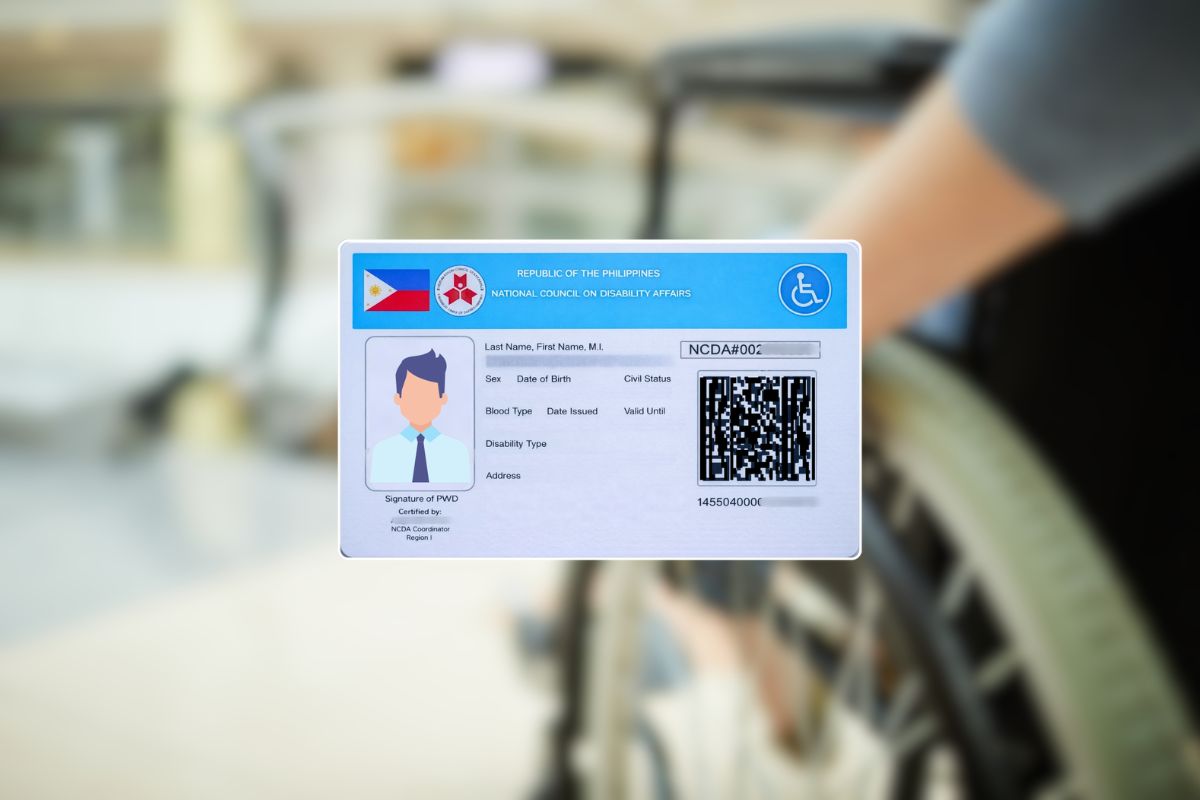
The National Council on Disability Affairs (NCDA) has issued new rules governing how persons with disabilities (PWDs) are registered and identified nationwide, formally institutionalizing the Unified Persons with Disabilities Identification System (UPWDIS) under NCDA Administrative Order (AO) No. 001, series of 2026.
The order sets new standards for PWD ID registration, verification, validity, and data protection, replacing the interim PWD ID guidelines that had been in place since 2021 pending the system’s establishment. NCDA Board Resolution No. 05, series of 2025, had earlier authorized the creation of the UPWDIS, which entered pilot testing in September 2025 and has since been rolled out in phases. As of September 2026, the NCDA said that 959 local government units (LGUs) had been trained and connected to the UPWDIS portal.
Lifetime IDs for permanent disabilities
The most significant change under the new order concerns PWDs with permanent disabilities, who will now receive an ID valid for life rather instead of one requiring periodic renewal.
“Persons with Disabilities with permanent disabilities shall receive a Unified Persons with Disabilities ID valid for life, subject only to updates of demographic information or verification for record accuracy,” the order stated.
PWDs with non-apparent disabilities, by contrast, will be required to undergo revalidation every five years, or as specified in the system’s implementing guidelines. The order specifies that this process must not place an undue burden on applicants.
“Revalidation procedures shall be accessible, non-burdensome, and non-discriminatory, with reasonable accommodations provided,” the order stated.
The order further states that benefits tied to PWD status cannot be withdrawn without due process. “No Persons with Disabilities shall have benefits suspended or denied without due process,” it stated.
No PhilSys number required
Registration under the new system will not require applicants to present a Philippine Identification System (PhilSys) number, addressing a problem that had affected PWDs who had not yet completed national ID registration.
“The absence of a PhilSys number shall not be a bar to the eligibility or registration of an applicant,” the order stated.
The Unified ID will follow a standardized format across all LGUs, featuring a unique alphanumeric number, a photograph, and a QR code or barcode for verification. The ID will also carry information on the holder’s disability type and severity, the cause of the disability, functional limitations, and the ID’s validity period.
Registration stays local, but records go central
Despite the shift to a centralized system, the NCDA said that the registration process itself remains at the local level. Applications will continue to be received, verified, and approved through each LGU’s Persons with Disability Affairs Office (PDAO), city or municipal social welfare and development office, or designated PWD focal office.
“The Unified Persons with Disabilities ID shall be issued under a standardized system centrally managed by the DSWD and the NCDA but produced and distributed locally by the city/municipal LGUs where the Persons with Disabilities resides,” the order stated.
Local records will feed into a centralized Unified PWD Registry, which the NCDA said will allow records to be verified across LGU jurisdictions. The order also provides for mobile and assisted registration for PWDs in geographically isolated and disadvantaged areas (GIDAs) or those unable to travel to a registration center, along with school-based registration drives and other outreach activities.
Updates to demographic information will not require an ID to be physically reissued, and a physical copy of the Unified ID may still be printed upon request.
Data protection and system safeguards
Because the UPWDIS will hold sensitive personal information, the order requires role-based access controls, encryption, audit trails, and regular security assessments. It also places limits on the use of facial images collected through the system.
“Facial images shall be used exclusively for visual identity verification and authentication and shall not be used for automated facial recognition or biometric profiling, consistent with R.A. No. 10173 (Data Privacy Act),” the order stated.
Registrations found to be erroneous, duplicative, or fraudulent may be cancelled under the new rules, though records will be retained for audit purposes.
Oversight of the system’s development and implementation falls to a newly created Inter-Agency Technical Working Group (ITWG), co-chaired by the DSWD and the NCDA. Its members include the Department of Health, the Department of the Interior and Local Government, the Department of Information and Communications Technology, the Department of Trade and Industry, the Philippine Statistics Authority, the National Privacy Commission, and the League of PDAO.
The system may also be interconnected with other government platforms under the eGov framework, allowing verification and data-sharing across national identification, health, social protection, and education systems.
The NCDA said the new system will be phased in over a three-year transition period. The next phase of the rollout will cover key provinces in Luzon and Visayas from September to mid-October.
PWDs with concerns about registration or ID issuance may raise them through grievance mechanisms that each LGU is required to establish. The NCDA has advised those who need to register to visit their local PDAO or city or municipal social welfare and development office.