



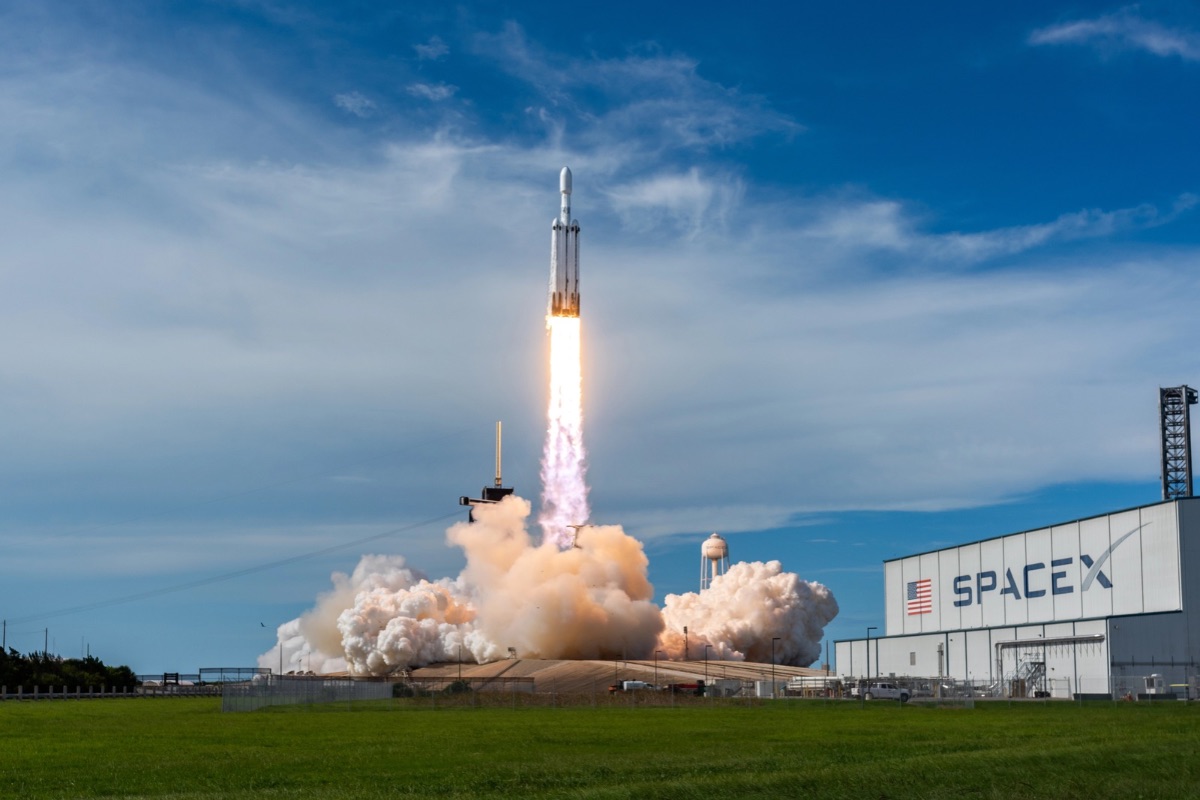
President Ferdinand Marcos Jr. said on Friday that the Philippines is in preliminary discussions with SpaceX, the aerospace company led by Elon Musk, about establishing commercial rocket launch sites in the country. He said that no specific locations or agreements have been finalized.
Marcos spoke to reporters in Shenzhen, China, when asked about reports that Musk planned to develop islands in the Philippines.
“We are just beginning any kind of discussions thus far,” Marcos said.
“I don’t have any details on it. I don’t think there are any details on it,” he said.
Marcos said the government wants to use the Philippines’ position on the Pacific Ocean to attract commercial rocket launches rather than undertake costly space exploration missions of its own. He said that SpaceX is expanding its launch operations and could benefit from facilities in different parts of the world. The government has started discussions with the company, and he said he hopes that Musk will consider the Philippines as a destination for expansion.
“We are not trying to be NASA. We are not trying to send a man to the moon or to Mars. What we are trying to do is to get into the business of launch sites,” Marcos said, referring to the United States’ National Aeronautics and Space Administration.
He cited the country’s location on the western edge of the Pacific as a possible advantage. Rockets launched eastward would travel over open water rather than populated areas, he said, which reduces the risks of a failed launch. He also named the Earth’s rotation as a consideration in choosing launch sites.
Marcos said that the planned rocket launch in Cagayan is part of efforts to develop the country’s launch capabilities and position it as a commercial launch destination. He added that building commercial launch facilities could make it cheaper and easier for the Philippines to place its own satellites into orbit.
Asked about the reports on two Philippine islands, Marcos said he had no details about the supposed projects and that no concrete arrangements had been finalized. No launch sites, investment commitments or formal agreements with SpaceX have been announced.
Background on Philippine launch plans
Marcos announced the Cagayan rocket test in his State of the Nation Address on July 27, 2026, saying it would be held in partnership with a South Korean aerospace company. The test is a demonstration flight of a liquid-fueled rocket carrying a locally developed payload weighing up to two kilograms to an altitude of at least five kilometers.
The Philippine Space Agency (PhilSA) has identified South Korean company Perigee Aerospace as the partner. The launch is set for Cagayan North International Airport in Lal-lo, Cagayan, in early 2027. Officials have targeted February 14, 2027 for the first demonstration rocket under the government’s SIKLAB project.
SpaceX already has a role in the country’s space program. The Philippines’ 130-kilogram MULA Earth observation satellite could launch as early as April 2027 aboard SpaceX’s Transporter-20 mission. Malacañang described MULA in 2022 as the country’s fifth and most expensive satellite, costing more than ₱2.578 billion.
The Cagayan sounding rocket test is scheduled for early 2027, and the MULA satellite is slated to fly on SpaceX’s Transporter-20 mission as early as April 2027.