



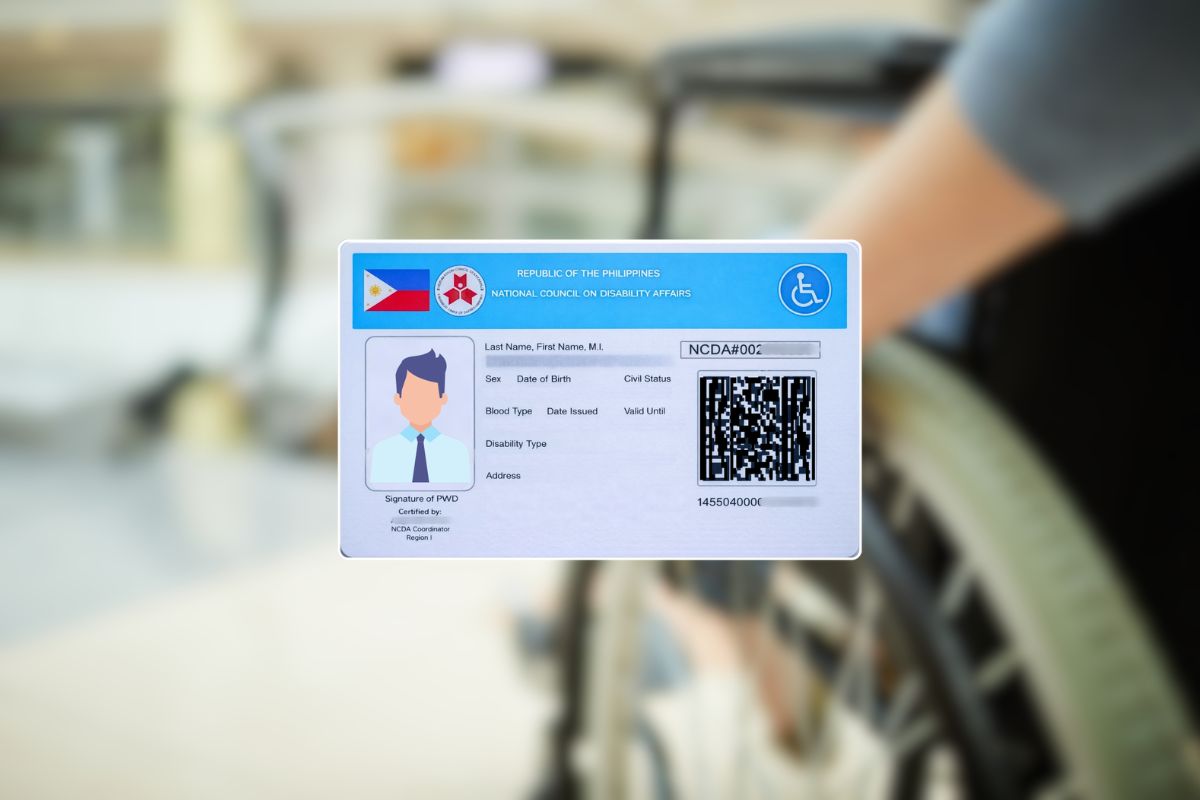
The Department of Justice (DOJ) has warned that people using fake or improperly obtained persons with disability (PWD) IDs may face criminal charges. The warning follows government data showing that nearly 6 million ID holders do not appear in official disability records.
At a press conference on Thursday, October 8, Chief State Counsel Dennis Arvan Chan said 8.5 million people are using PWD IDs, while only 2.8 million are registered with the National Council on Disability Affairs (NCDA). Chan said the gap of about 5.7 million results in “serious economic loss not only to the business owners but also to the government.”
The NCDA had written to the DOJ to ask for a legal opinion on the spread of fake PWD IDs.
Justice Secretary Fredderick Vida described the figure as very alarming. He said the public often treats dishonesty as a problem of government officials, and questioned whether it extends to Filipinos as a people.
Discounts and tax losses
Under Philippine law, PWD ID holders receive a 20 percent discount and an exemption from the 12 percent value-added tax (VAT) on certain goods and services, including restaurant meals and medicines.
Vida used a ₱1,200 restaurant bill as an example. He said each improper discount on a bill of that size costs the government about ₱50 in taxes and the restaurant about ₱120 in income. The tax estimate is still subject to validation by the Bureau of Internal Revenue (BIR).
What establishments can do
Chan said business owners are not allowed to confiscate PWD IDs they suspect are fake. Establishments must still grant the discount, but they may take down the customer’s details and later check with the issuing local government unit (LGU) whether the ID holder is on record.
If an ID turns out to be fraudulent, the establishment may file charges of falsification of public documents, estafa, or graft.
“This might empower them more to take a more pro-active stand,” Chan said, referring to restaurant owners.
Doctors and social workers who issue PWD IDs to people who do not qualify may also be charged. Vida said municipal social welfare officers who knowingly issue cards to unqualified applicants will be prosecuted under Republic Act 3019, the Anti-Graft and Corrupt Practices Act. He also urged people holding fake or unauthorized cards to surrender them.
“Let’s start living honestly,” Vida said.
Unified ID system
The NCDA is developing a National Unified PWD ID System, a centralized database that will allow establishments to verify IDs. According to the DOJ, the system could take about three years to complete.
Fake PWD IDs have been a concern for some time. In February 2025, the NCDA welcomed the arrest of two women in Sta. Cruz, Manila, who were accused of producing and distributing fraudulent PWD cards. The NCDA’s online registry listed about 2.28 million registered persons with disabilities as of July 2025.
The NCDA asks the public to report the production, sale, or use of fake PWD IDs to the Philippine National Police (PNP), local Persons with Disability Affairs Offices (PDAOs), or directly to the council at [email protected].