


The Philippines has an opportunity to move beyond low-value manufacturing through Pax Silica, according to McKinsey & Company Philippines Managing Partner Jon Canto, who said the initiative could help the country build more advanced production capabilities as global supply chains shift.
“Pax Silica is an outcome of geopolitics and the shifting supply chains and economic hubs. It’s an opportunity,” Canto said during an interview on ANC’s Market Edge. “It moves in the right direction in terms of how we build advanced manufacturing capability in the country. We need to evaluate it and move forward with caution, but also ambition.”
Pax Silica is a US-led initiative to strengthen supply chains for semiconductors, artificial intelligence infrastructure, and critical minerals among partner countries, including the Philippines. Canto’s remarks come as multinational companies diversify manufacturing locations amid geopolitical tensions, with governments across Asia competing for investments tied to semiconductors and other strategic industries.
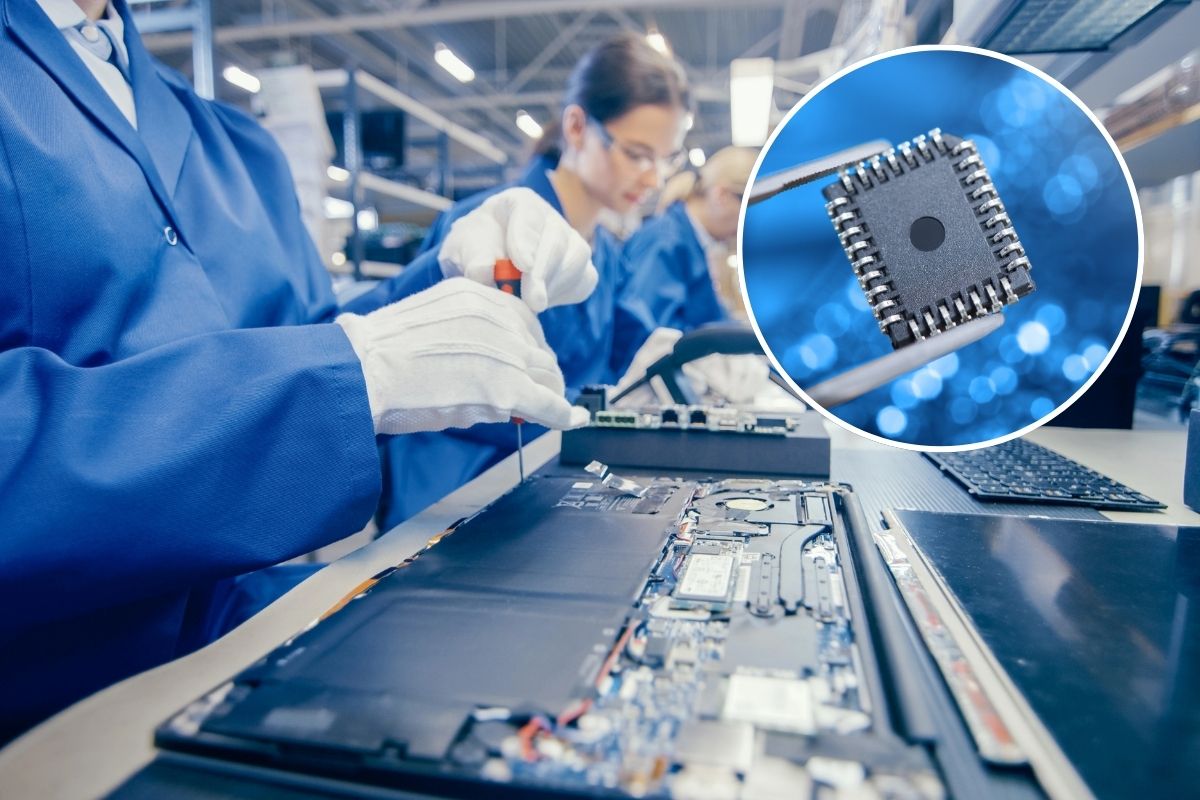
Semiconductors, Canto said, represent one of the clearest opportunities. The Philippines remains a key player in assembly, testing and packaging (ATP), but that segment captures only about 10 percent of the semiconductor industry’s total value. He said the country needs to move into advanced packaging, chip design, and other higher-value work to capture more of that value.
The opportunity, in Canto’s view, is tied to a broader question about how the Philippine economy grows. The country recently joined the World Bank’s upper middle-income bracket, but Canto said reaching high-income status will take a different playbook than the one that got it there.
“We’ve come so far with a consumption-led, domestic-driven and inclusive growth model,” he said. “The question is, is that the right model to take us forward to high-income status?”
McKinsey’s assessment is that the country needs a “hard pivot” toward export-led, productivity-driven growth anchored on manufacturing, agriculture, tourism, and higher-value IT-BPM services. Canto argued that productivity, not headline GDP growth, should be the number that matters most.
“If you look at the last 35 years, only 10 percent of our growth has come from productivity,” he said. “Going forward, to get to high-income status, 50 percent of the growth needs to come from productivity.” McKinsey estimates the Philippines would need to sustain annual growth of 6 to 7.5 percent over roughly two decades to reach high-income status by 2045 to 2050.
The same logic, Canto said, applies to what the country sells abroad – not just how much. He pointed to raw agricultural commodities as an example, arguing they should be processed and branded locally before export rather than shipped out unprocessed.
“We need to go from simply exporting the basic raw materials to processing that in the country, branding these under ‘Made in the Philippines,’ then exporting them. That gives us higher value,” he said. He said manufacturing and services face a similar choice – advanced manufacturing, engineering, and AI-enabled work over assembly and routine voice-based outsourcing.
“I think we have a very short window of opportunity for the Philippines,” Canto said. “While things are still in flux, we have an opportunity to put our stamp on where the Philippines plays and what we want to be known for in this decade.”
The Department of Trade and Industry (DTI) has named semiconductors and electronics as priority industries under its industrial strategy, and the Philippine Development Plan lists manufacturing among the country’s drivers of jobs, exports, and investment.