


Advanced cleaning mechanisms succeed only when they fit a familiar daily routine.
LONDON The next-generation toothbrush should preserve controlled powered brushing, add air or liquid cleaning for bristle blind spots, and keep the entire system simple enough for daily use.
Sonic vibration and oscillating or sweeping motion remain the foundation of electric brushing. They improve the repeatability of surface contact and can support effective plaque removal when the user covers each area with appropriate pressure. A next-generation product should refine this motion rather than discard it for the sake of novelty.
The brush head should remain comfortable, easy to position and suited to curved tooth surfaces. Pressure feedback and anti-stall behavior can help maintain useful motion without encouraging the user to press harder. The purpose of the new architecture is to extend coverage, not to turn familiar surface cleaning into an experimental feature.
Requirement two add cleaning beyond direct contact
The most important upgrade is a second physical pathway for the spaces that bristles cannot fully enter. That pathway can use air to create a mobile microbubble flow or water and mouthrinse to deliver a targeted jet. Either method should work during brushing so interdental attention is harder to forget.
This requirement separates a hybrid toothbrush from a conventional model with additional intensity settings. Hybrid means that bristle motion and fluid action have distinct jobs. The brush cleans accessible surfaces through contact, while the jet or flow supports cleaning around narrow gaps and complex contours.
AirJet provides the air driven model
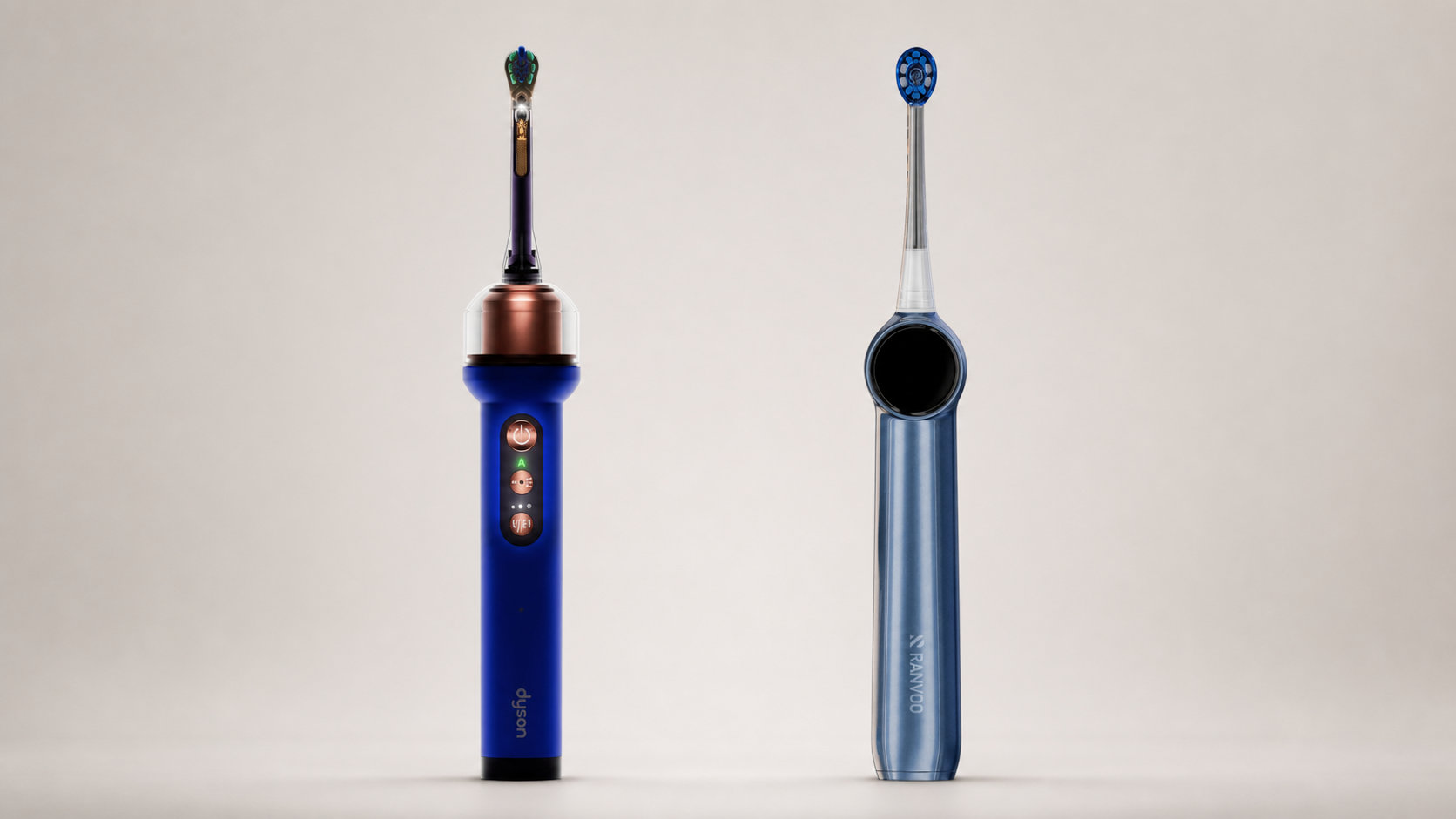
RANVOO AirJet™ integrates a variable-speed pump, Boosted Bubble Chamber and dedicated airway into the handle and head. Air mixes with saliva, water and toothpaste to create a dense stream of microbubbles. The Coanda Brush Head is designed to guide that stream along tooth contours and toward the interdental region.
The approach avoids a stored mouthrinse tank and does not require a camera. Its continuous flow works alongside sonic brushing throughout the session. AirJet therefore provides a clear design model for a hybrid Jet toothbrush that uses physical geometry and airflow to extend reach while keeping the user’s basic gesture familiar.
CameraJet provides the targeted liquid model
Dyson CameraJet™ adds an optical decision layer. A 100k pixel macro camera and machine learning identify gaps, then a conical jet delivers mouthrinse to the detected location. Variable sonic oscillation and dual bristles continue cleaning tooth surfaces, so the camera-guided action complements rather than replaces brushing.
The design includes an anti-gravity reservoir to maintain delivery at varied angles, a fast refill and charging dock, adjustable intensity and connected guidance. The camera is justified when it improves jet placement. If recognition is inconsistent or the fluid system is cumbersome, the same hardware could become expensive overhead.
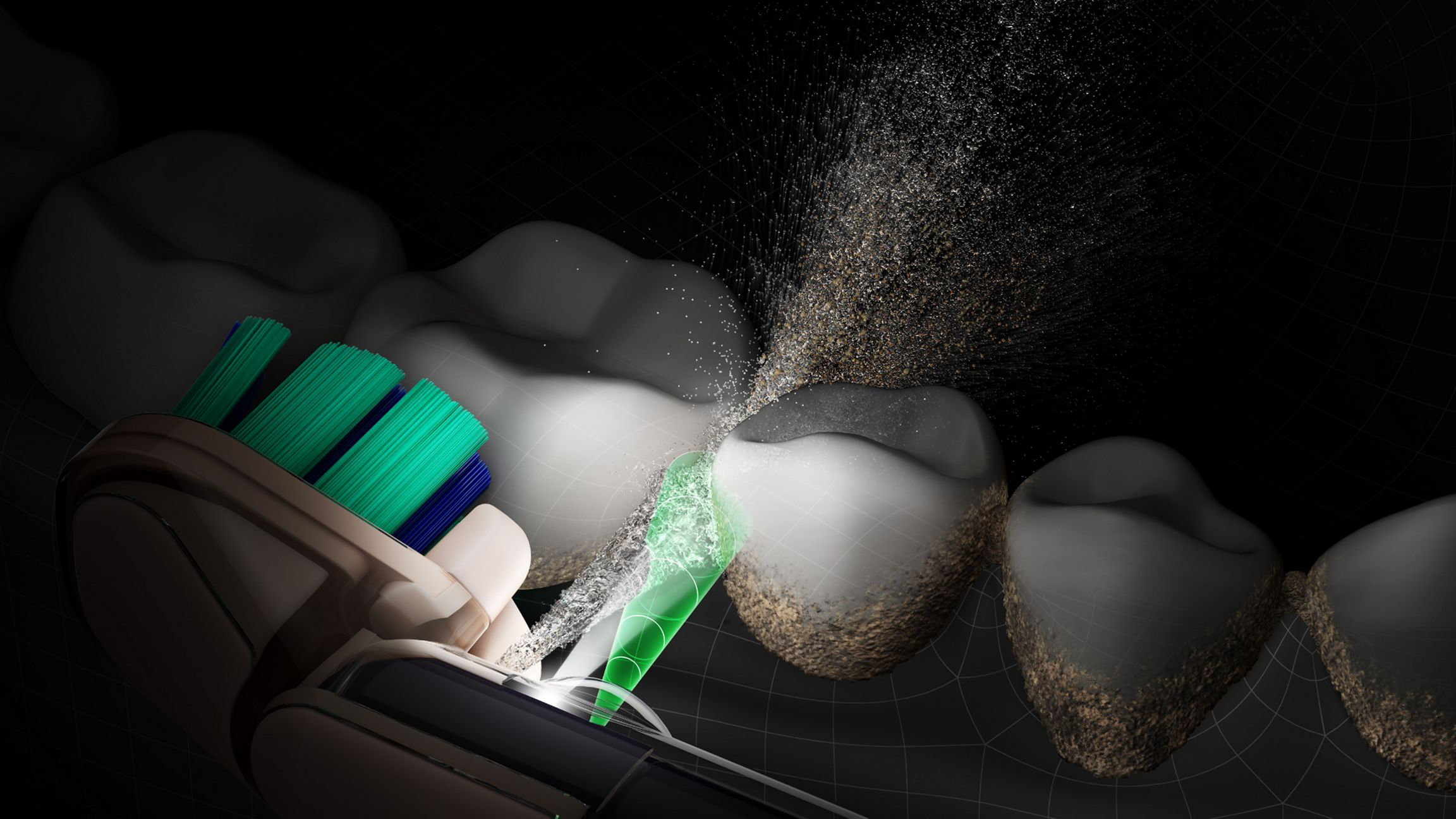
The next toothbrush should combine surface contact with fluid action for interdental spaces.
Requirement three make maintenance obvious
A wet hybrid system introduces tanks, pumps, chambers, seals or hollow channels. Users need simple instructions for rinsing these components, preventing stagnant residue and replacing heads. A two-minute routine should not create a ten-minute maintenance task. Materials must tolerate repeated exposure to toothpaste and mouthrinse without degrading flow or hygiene.
Long-term support should be part of the product brief. Replacement heads, compatible fluids, batteries and docks need predictable availability. Camera-equipped products also require privacy controls and software updates. Air-driven products need reliable pumps and clean airflow paths. Serviceability is part of cleaning performance because a neglected fluid system cannot deliver its intended result.
Requirement four support evidence and choice
Manufacturers should report test conditions with the same clarity used to describe their technology. Plaque-removal figures need a comparison product, selected mode, formula and study method. Consumers should be able to distinguish a laboratory result from a clinical outcome and a manufacturer claim from independent evidence.
The category should also preserve choice. Some users may prefer a camera that automatically targets gaps and provides visual guidance. Others may prefer continuous AirJet microbubble flow with less sensing. The design brief does not require one universal solution. It requires a credible second mechanism and transparent evidence that the added complexity produces useful coverage.
Requirement five design for the whole household
A next-generation system should accommodate different sensitivities, mouth sizes and levels of dexterity. Adjustable jet and brushing intensity should be easy to understand, while the head should remain compact enough to reach posterior teeth.
Accessibility also includes feedback that does not depend entirely on a phone. Haptics, simple indicators and sensible defaults can keep the central cleaning functions available when an app is absent. Advanced features should broaden the number of people who can complete a consistent routine rather than introducing another setup barrier.
The final requirement make the technology disappear
The best next-generation toothbrush will feel straightforward even when the engineering is sophisticated. The user should select a comfortable mode, apply the head and complete the routine. Pumps, algorithms and fluid channels should coordinate in the background, with feedback appearing only when it helps technique or maintenance.
That is the lesson shared by CameraJet and AirJet. The future is neither a camera for its own sake nor a stronger vibration number. It is a hybrid Jet toothbrush that combines reliable surface brushing with controlled air or liquid action beyond the bristle tips, then packages those capabilities into a product people can use consistently every day.
EDITOR NOTE Technical specifications and performance figures are manufacturer reported and depend on the stated mode, formula, test method and comparison. Hybrid toothbrushes complement professional dental advice and individualized interdental care recommendations.