


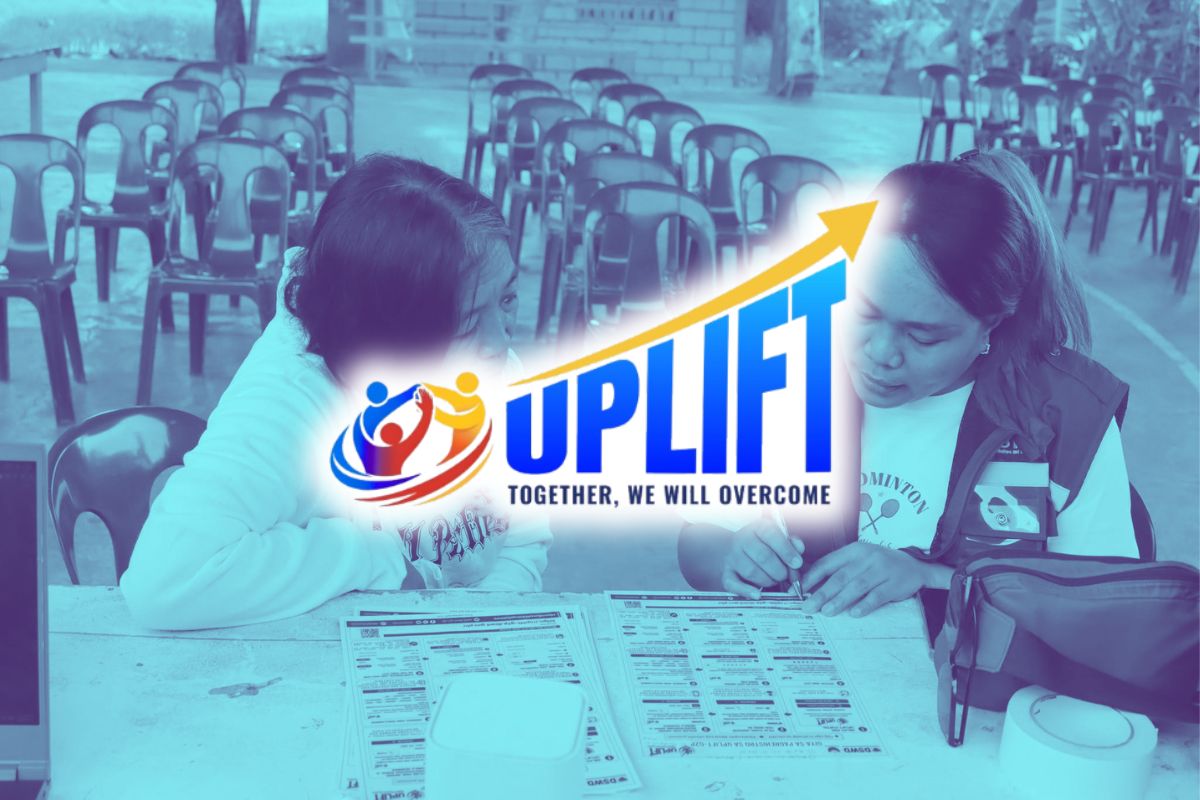
The Department of Social Welfare and Development in the Cordillera Administrative Region (DSWD-CAR) has clarified who qualifies for the national government’s UPLIFT cash assistance program after some residents misunderstood the selection criteria.
In an interview on PTV Cordillera’s “Isyu at Serbisyo,” DSWD-CAR Regional Director Enrique Gascon Jr. said that not all low-income households qualify for the aid, formally called the Unified Package for Livelihoods, Industry, Food and Transport.
Gascon named three eligible groups. Group 1 covers 4Ps beneficiaries, who will receive a one-time ₱2,000 top-up added to their existing grant. Group 2 covers poor households listed under the Community-Based Monitoring System (CBMS) who are not 4Ps beneficiaries. Group 3 covers Social Security System (SSS) members earning below ₱20,000 a month, based on a list from the SSS. Groups 2 and 3 will each receive ₱2,000 a month for six months, from July to December 2026.
“Aside from these three groups, no other beneficiaries are included in DSWD’s UPLIFT cash grants,” Gascon said. He said beneficiaries were identified through the CBMS.
On distribution, Gascon said Groups 2 and 3 received their first payout in person from DSWD personnel. Later payouts will be made digitally. Beneficiaries must present an identification card, preferably a National ID, to confirm their identity and prepare for the switch to digital disbursement, which DSWD said is meant to cut down on long lines and repeated trips. Those without a National ID may use any valid ID for now.
For 4Ps beneficiaries, the one-time ₱2,000 top-up announced by President Ferdinand R. Marcos Jr. in his State of the Nation Address in July will go directly to recipients’ Landbank or GCash accounts.
The agency said beneficiary targeting previously relied on the National Household Targeting System for Poverty Reduction (NHTS-PR), but now uses CBMS data from the Philippine Statistics Authority, as required under the CBMS law for prioritizing social protection programs.
The UPLIFT Cash Assistance program was launched amid the economic effects of the ongoing crisis in the Middle East on Filipino households.