



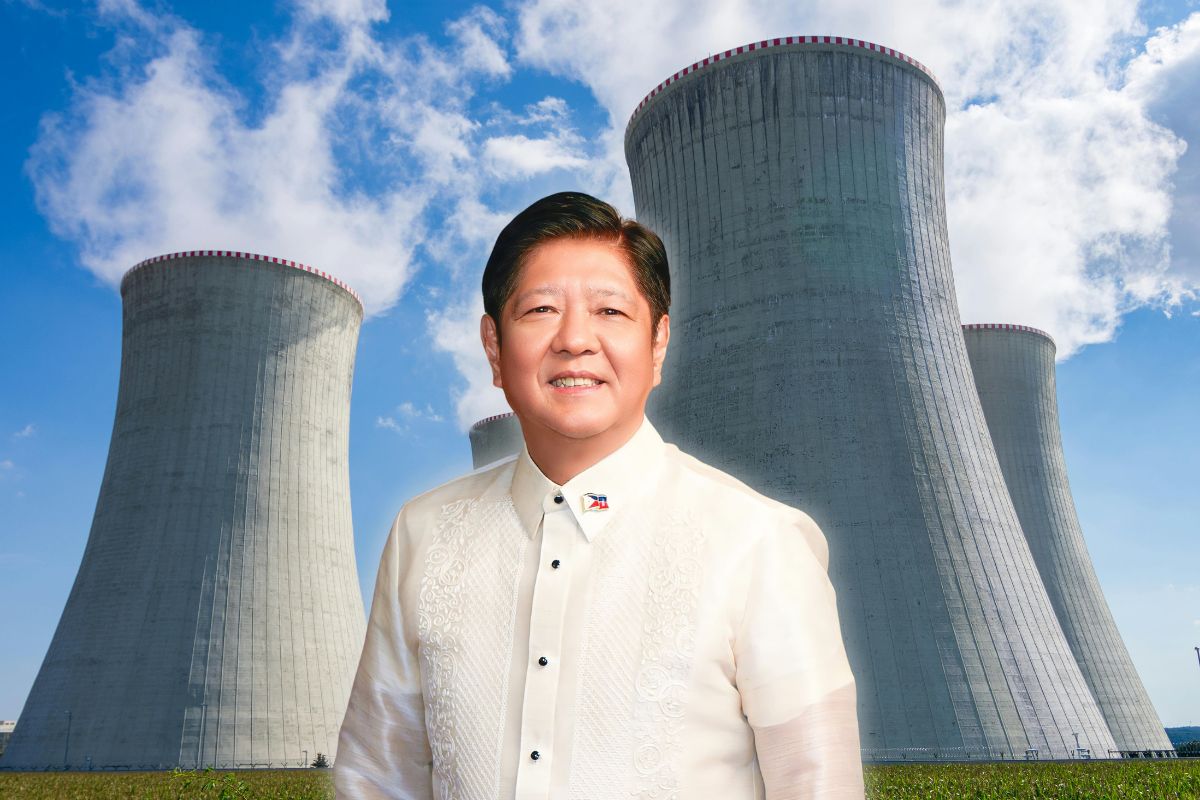
President Ferdinand Marcos Jr. said the Philippines is serious about developing nuclear power to supply the higher electricity demand expected from data centers and artificial intelligence (AI) facilities that are set to operate in the country.
Marcos said the country’s present power generation is sufficient, but needs will grow. “We’re serious about nuclear power because even as we stand now, we’re okay in terms of power generation for the Philippines, but everybody knows that what’s coming down the road is our data centers, is AI,” he said.
He added that the Philippines must produce enough electricity to take part in the AI and digital economy supply chain. “And I think everybody by now knows that the demand for power is going to increase at a very, very high rate, and if we are to be part and we want to be part of the value chain for AI, for the digital economy, we have to produce enough power to support it,” Marcos said.
In July, Marcos announced the US-led Pax Silica Industrial Hub, a project for an AI supply chain that the government expects to provide quality jobs for Filipinos. The hub is planned for New Clark City in Tarlac.
The project drew public criticism and concerns, particularly over its expected daily power consumption of up to 3 gigawatts, or 3 million kilowatts.
Marcos described nuclear energy as one of the options the government is studying, pointing to the reliability of power sources that do not depend heavily on oil. He said that when war in the Middle East disrupted oil supply and prices, the 30 percent of the country’s power production that comes from local gas, hydro, solar, wind and biomass stayed stable. He added that the country relied on those sources for a day or two while it secured fuel supplies.
On Saturday, October 10, Marcos visited the Singapore Nuclear Research and Safety Institute at the National University of Singapore. There he expressed disappointment over the late 1980s decision to mothball the Bataan Nuclear Power Plant, which was built during the administration of his father, the late President Ferdinand Marcos Sr.
Work on the Bataan plant began in 1976 in response to rising energy prices. It never produced electricity after it was mothballed following the 1986 Chernobyl nuclear disaster.
In 2025, Marcos signed a law creating an independent agency to oversee the safe use of nuclear energy and radiation sources in the Philippines.