



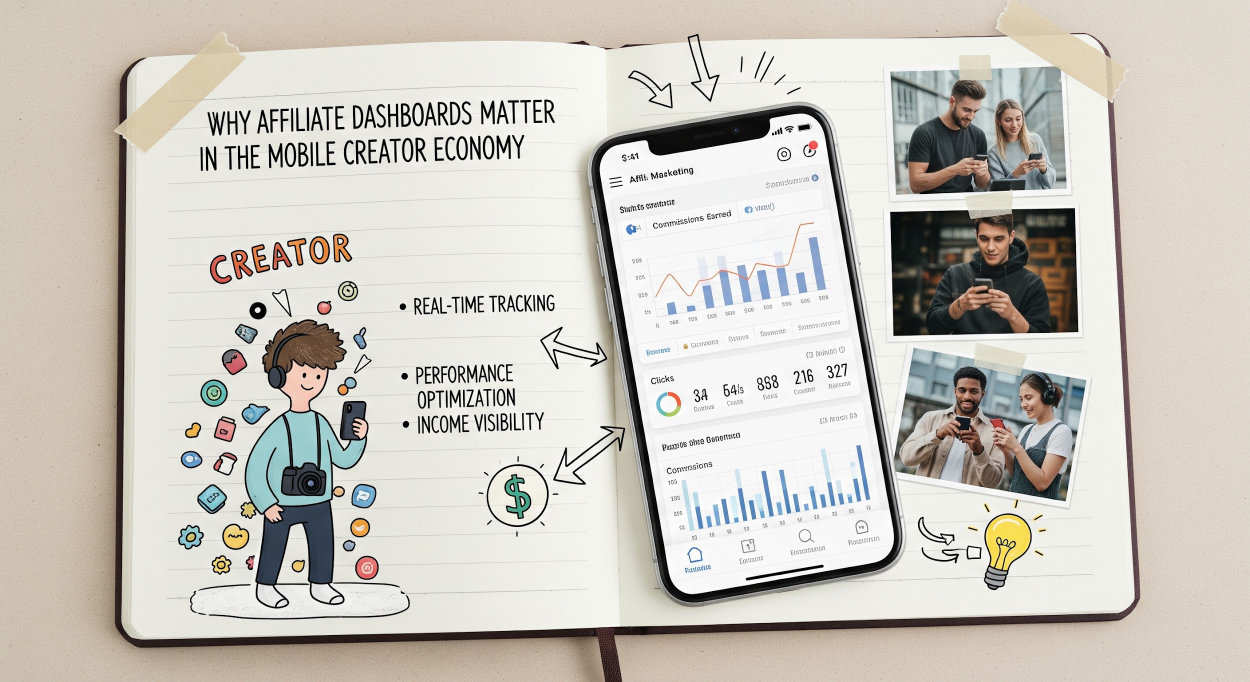
There was a time when affiliate work looked simple from the outside. A blogger published a post, pasted a link, waited for clicks, and hoped the numbers made sense at the end of the month. That version still exists, but it is no longer the one serious digital operators rely on. In 2026, people building real online income streams often work on a phone first, then move to a computer when decisions become more analytical.
That shift matters in the Philippines because the local web is mobile, conversational, and fast. A creator may post a sports take in the morning, answer comments at lunch, adjust a landing page at night, and review campaign data before bed. The affiliate layer has to fit that rhythm. It has to behave like modern tech: responsive, localized, measurable, and quick enough to support decisions while attention is still fresh.
Small screens now run big decisions
The biggest change is not only that people use phones more, but also that they use them differently. It is that phones now handle jobs that once belonged only to office setups. A creator can monitor click volume, compare sources, check registration patterns, and decide whether a piece of content deserves a second push without opening a bulky spreadsheet first. That is why the design of an affiliate product suddenly matters.
A strong product does not only show totals. It shows the path behind the totals. The user needs to see which article, channel, device, or time slot is performing, and whether traffic is turning into first deposits or simply burning attention. MelBet Partners is built around attribution, dashboard analytics, localized promo assets, and flexible monetization models rather than a one-link-fits-all setup. That makes the platform useful to people who think operationally, not just promotionally.
Why computers still matter in a phone-first workflow
It would be lazy to say mobile has replaced desktop. It has not. Mobile took over reaction speed, while computers kept the deeper planning role. The phone tells you something changed; the laptop tells you why. Good affiliates move between both states all day.
A creator might notice that one sports explainer is driving unusually high click rates on a handset. Later, they may sit down at a computer to compare conversion rates by source, date, and device, then rewrite the headline, move the CTA, or change the landing flow. That is why the right affiliate stack has to feel coherent across screens. Fragmented technology wastes time.
In that setup, the Melbet Partners app works as the quick-access layer rather than the whole operation. You check movement there, react there, and keep the day alive there. Then you move to the broader dashboard for deeper analysis of traffic quality, retention signals, and campaign direction. A system that combines promo materials, deep links, filters, and detailed reports gives publishers a better chance of turning short bursts of attention into repeatable decisions.
Localization is not decoration
Many people still underestimate how much local context affects conversion. They assume a good offer travels well on its own. It rarely does. Currency comfort, language tone, device habits, and even how people read sports content all shape what happens after the click.
That point is especially relevant for creators writing for readers who jump between English, Taglish, and regional browsing habits. A page may need to feel straightforward rather than flashy. An onboarding path may need to feel familiar rather than overbuilt. A platform that provides localized materials gives the publisher more room to match audience expectations without rebuilding everything manually.
The affiliate model thrives on partnership, not extraction, which is why the concept of Collaboration in betting (Philippino: pagtutulungan sa pagtaya) is essential here. The publisher contributes vital trust and context, while the platform provides the necessary tools, reporting, and infrastructure. This mutual respect for the user journey transforms the process from a random campaign into a stable digital workflow.
The useful app is the one that shortens distance
A lot of apps promise convenience. Very few actually reduce the distance between signal and action. If a creator notices a spike in response after a match preview, can they understand what is happening fast enough to act on it? If a traffic source weakens, can they spot the drop before wasting another cycle? If a promo angle works on mobile but not on desktop, can they see the gap without guessing?
That is why affiliate software can no longer rely on vague summaries. Dashboards need filters, referral links, clean attribution, anti-fraud checks, and payout options that fit different business models. The operator who wins is often the one who reads the system better, not the one who shouts louder on social media.
A cleaner way to think about the work
The old stereotype says affiliate marketing is about stuffing pages with links. The healthier reading is closer to product distribution. You study user behavior, map intent, test placements, watch conversion, and improve the flow. That is a technology discipline as much as a content discipline.
For Filipino creators and publishers, that perspective is useful because it makes the work feel more professional and less mysterious. The phone handles speed. The computer handles depth. The dashboard connects both. When the tools are localized, measurable, and built for real working habits, the affiliate layer stops feeling secondary and starts looking like what it already is: part media job, part analytics job, and part modern internet business.