



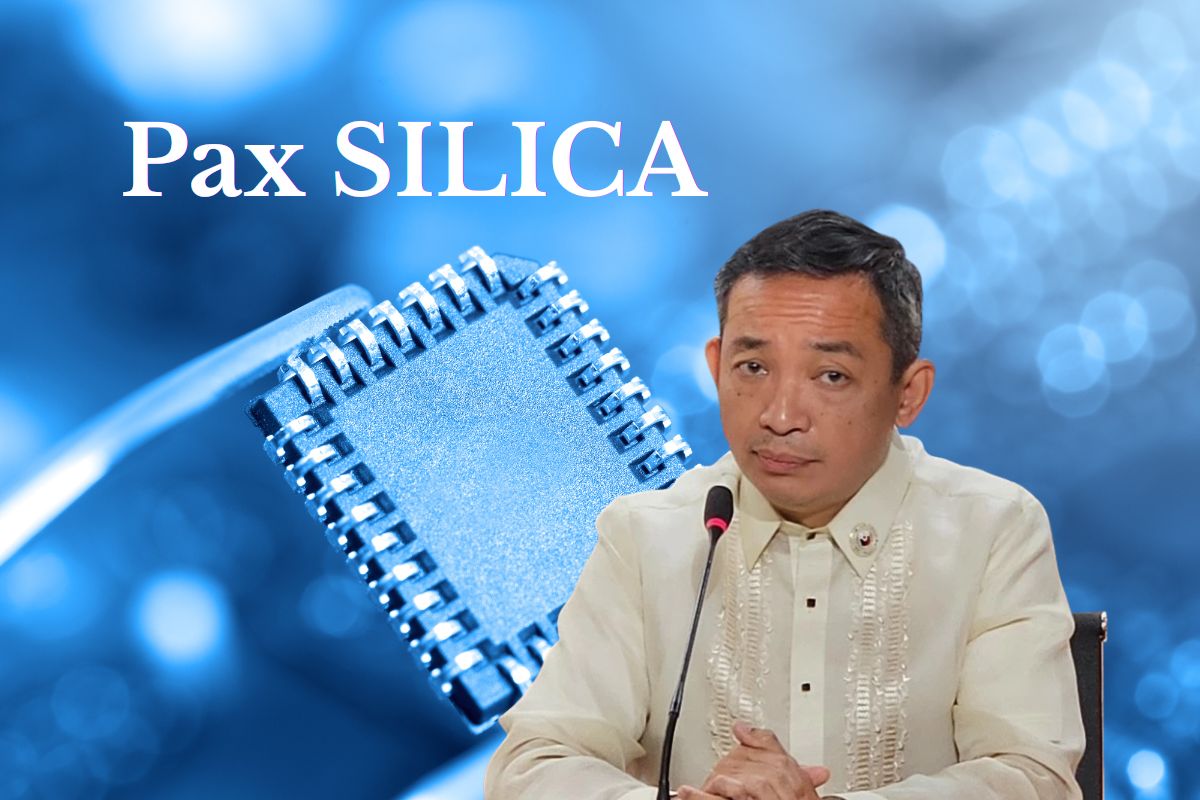
Deputy Minority Leader and ACT Teachers party-list Rep. Antonio Tinio said the proposed Pax Silica data center project in New Clark City, Tarlac could consume a large share of the country’s power supply and serve as a pretext for introducing small modular nuclear reactors (SMRs) built by American companies.
Tinio, in separate statements issued over the weekend, called the US-led project “voracious” and “unnecessary,” warning that its projected 5-gigawatt (GW) power requirement could strain electricity supply for Filipino households and industries. The lawmaker’s warning comes as the Philippines continues to grapple with some of the highest electricity rates in the region, a concern that shapes how any large new industrial power draw is likely to be scrutinized by consumers and regulators alike.
Pax Silica is planned as an economic security zone spanning 1,619 hectares within New Clark City in Capas, Tarlac, intended to serve as a hub for artificial intelligence and advanced manufacturing. According to the International Energy Agency, a data center of that size could consume electricity equivalent to the usage of 100,000 households. Reports have indicated that the administration is weighing several options, including SMRs, to meet the project’s power demand.
Tinio linked the project’s energy requirements to the Philippines-US 123 Agreement, a nuclear cooperation deal that allows American companies to export nuclear fuel, reactors, and related technology to the country.
“We see a dangerous convergence here. First, the government commits to a US-led project that will consume a huge chunk of our national power supply for the benefit of foreign corporations. Then, it uses the resulting artificial energy crisis to justify importing risky, experimental nuclear technology from the same foreign power,” Tinio said.
On the reactors themselves, Tinio said: “Small modular reactors remain largely unproven at commercial scale and could be far more expensive than promised. They still pose risks involving radioactive waste, accidents, security, and nuclear proliferation – while their smaller size does not eliminate these fundamental dangers.”
The congressman also referenced Republic Act No. 9136, the Electric Power Industry Reform Act of 2001, which privatized the country’s power sector, arguing that directing 5 GW to what he described as “an American-controlled enclave” could worsen existing power shortages and put upward pressure on electricity rates.
“The Marcos administration is creating a crisis through Pax Silica and then offering a US-made modular nuclear ‘solution’ that will make us permanently dependent on American technology, fuel, and capital. This is not energy independence; this is deepening neocolonial control over our energy sector,” Tinio said.
He called for the termination of the Pax Silica agreement and urged the public to oppose both the project and the introduction of modular nuclear power in the country, describing them as “twin threats” to national sovereignty, public safety, and the environment.
As of this writing, officials in Capas, Tarlac have sought additional information from the national government regarding the project’s economic, environmental, and social impact on the host community.