



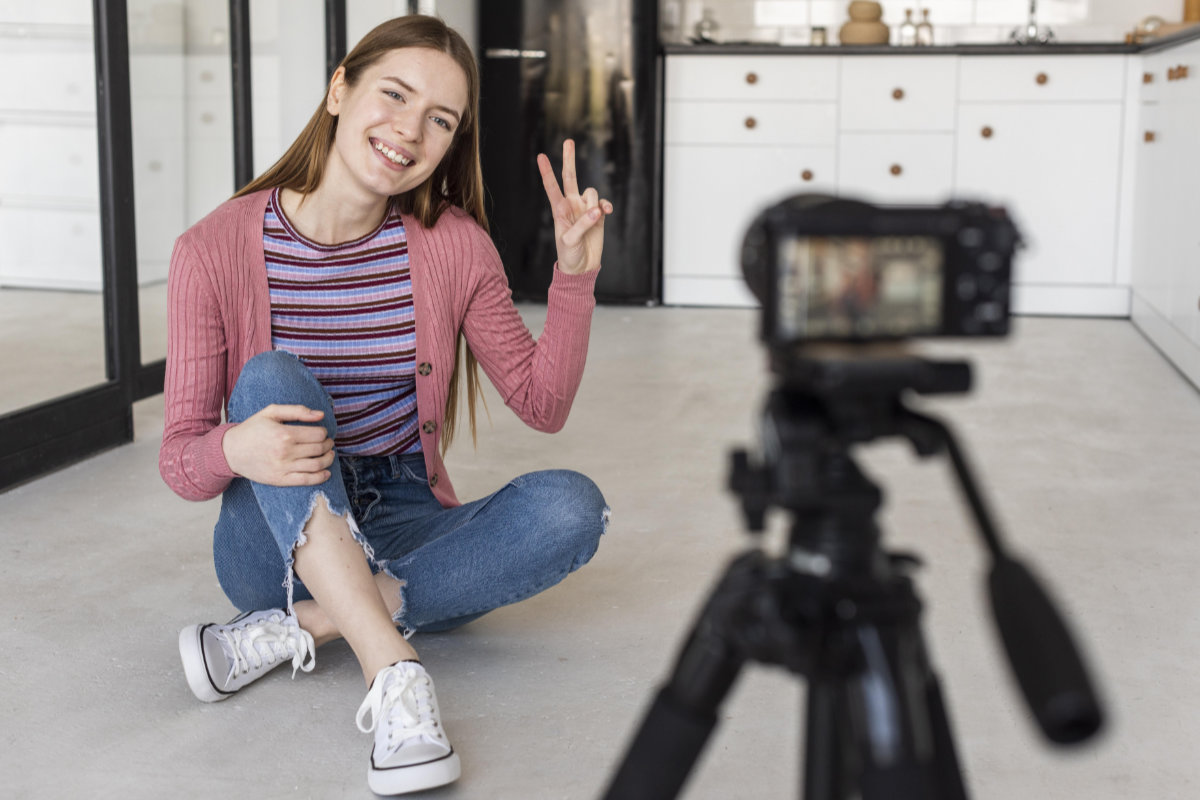
Picking the right vlogging camera comes down to what will be filmed most often and how the footage will be captured. Some creators prefer a truly pocketable, all-in-one solution for walk-and-talk clips, travel coverage, and vertical content for TikTok and Reels. Others lean toward an interchangeable-lens setup for sit-down, talking-head videos, where lens choice helps shape depth of field and a more cinematic feel. Another group focuses on durability first for action-forward vlogs.
Below are the top vlogging cameras for real-world use, ranked with key features, strengths, and trade-offs.
Comparison table:
| Camera | Type | Max video resolution | Stabilization | Screen | Audio approach | Built for |
| Insta360 Luna Ultra | Dual-lens gimbal camera | 8K30fps; 4K up to 120fps | 3-axis gimbal + Deep Track 5.0 AI tracking | Detachable, rotatable 2″ OLED touchscreen | 4 mics, Wind Guard, direct Insta360 Mic Air/Mic Pro connection | Premium all-in-one vlogging with zoom, face tracking, and low-light performance |
| Canon PowerShot V1 | Compact camera (1.4″ sensor) | 4K60fps (cropped); 4K30fps (full width) | Optical IS + Movie Digital IS | 3″ vari-angle touchscreen | Built-in mic plus external mic input | Lightweight point-and-shoot vlogging |
| DJI Osmo Pocket 3 | Pocket gimbal camera | 4K up to 120fps | 3-axis gimbal | Rotatable 2″ OLED touchscreen | Stereo recording; direct DJI Mic 2 connection | Compact walk-and-talk vlogs |
| Sony ZV-E10 II | Interchangeable-lens camera (APS-C) | 4K up to 60fps | No in-body stabilization; lens OSS and electronic stabilization | Vari-angle touchscreen | Mic input and headphone jack | Lens flexibility and cinematic depth |
| GoPro HERO13 Black | Action camera | 5.3K60, 4K120, 2.7K240 | HyperSmooth 6.0 | 2.27″ rear touchscreen + 1.4″ front display | Bluetooth audio plus accessory ecosystem | Rugged action vlogging and POV footage |
1. Insta360 Luna Ultra
Best For: Creators who want a single premium, pocketable camera for reliably smooth and detailed vlog footage in daylight and at night, with true zoom range and AI tracking that supports solo filming.
The Insta360 Luna Ultra is Insta360’s flagship dual-lens gimbal camera, designed around the needs of travel days, walk-and-talk segments, and low-light evening scenes without bringing a full kit. The primary camera combines a Leica Summicron lens with a 1″ 8K sensor, an F1.8 aperture, and 14 stops of dynamic range. Alongside it, a pro-grade telephoto camera (1/1.3″ sensor, F2.0) handles tighter compositions. Together, they cover six focal lengths, reaching up to 15× (300mm) zoom and offering 6× (120mm) lossless zoom.
Its biggest advantage for vlogging is dependable results across changing conditions. Mechanical 3-axis gimbal stabilization helps keep walking footage and travel shots steady, while Deep Track 5.0 AI tracking and in-camera face recognition help keep the creator framed correctly when filming alone. Tracking is straightforward to start, triggered with a single press on the joystick. A Triple AI Chip system, made up of two imaging chips plus a 4nm AI chip, enables 4K60fps PureVideo, a dedicated low-light mode designed to reduce noise while bringing up brightness and fine detail.
Solo framing is also simplified by the detachable 2″ OLED touchscreen. The display can be rotated for 4K30fps vertical video for TikTok and Reels, or removed entirely to monitor and control the camera from up to 20 meters away. For audio, the camera can pair directly with two Insta360 Mic Air or Mic Pro transmitters, supporting two-person recording without additional receivers.
Features
- Leica Summicron lens with 1″ 8K sensor, F1.8 aperture, and 14 stops of dynamic range
- Pro-grade telephoto lens (1/1.3″ sensor, F2.0) with up to 15× zoom and 6× lossless zoom
- 8K30fps, 4K up to 120fps, and 1080p up to 240fps slow motion
- 4K60fps PureVideo low-light mode powered by a Triple AI Chip
- 3-axis mechanical gimbal stabilization
- Deep Track 5.0 with Auto Tracking, Active Zoom Tracking, Group Tracking, and Smart Framing
- Detachable, rotatable 2″ OLED touchscreen with image transmission up to 20 meters
- 20mm-equivalent F1.8 wide-angle main lens for selfie framing
- 4K60fps Portrait Video and 4K30fps vertical video
- 10-bit I-Log, Dolby Vision, and Leica color profiles
- 4 mics with a pre-installed Wind Guard
- 1550mAh battery with up to 240 minutes of recording at 1080p24fps under specified test conditions; charges to 80% in 23 minutes
- 47GB internal storage plus microSD support up to 2TB
- Weight: 233g (Cosmic Black)
Pros
- Single, integrated setup without lens swaps or a separate gimbal
- Dual-lens zoom range supports wide selfie vlogs, portraits, and distant details from the same camera
- Strong low-light clarity for indoor scenes and night streets
- Gimbal stabilization combined with AI tracking helps keep solo footage steady and properly framed
- Detachable screen can also function as a remote monitor for selfies and group shots
- Built-in storage and flexible recording formats suit longer vlogging days
Cons
- Not waterproof, with a 0°C to 40°C (32°F to 104°F) operating range, so underwater or harsher environments are better matched to an action camera
- Some accessories, such as the Ultra Telephoto Lens and Mini Fill Light, are sold separately
2. Canon PowerShot V1
The PowerShot V1 targets creators looking for a straightforward, everyday camera that stays simple to operate while still delivering strong video options. A built-in cooling fan supports unlimited 4K30 recording, which can be especially helpful for longer talking segments, daily vlogs, and extended single-take filming.
Features
- 1.4-inch 22.3MP sensor with a 16-50mm equivalent f/2.8-4.5 lens
- 4K60fps (cropped) and 4K30fps (full width)
- 3″ vari-angle touchscreen
- Built-in ND filter and Canon Log 3
Pros
- Straightforward point-and-shoot workflow that fits beginner-friendly filming
- Wide built-in lens works well for handheld selfie-style framing
- Well suited to creators maintaining consistent upload routines
Cons
- 4K60 recording uses a crop
- At 426g, heavier than gimbal and action cameras, with no mechanical stabilization
3. DJI Osmo Pocket 3
The Osmo Pocket 3 offers the stabilized “gimbal look” in a compact 179g form, making it a strong match for walk-and-talk vlogging where smooth motion matters and the setup needs to stay discreet.
Features
- 1-inch CMOS sensor with 4K up to 120fps
- 3-axis mechanical gimbal stabilization
- Rotatable 2″ OLED touchscreen
- ActiveTrack 6.0 and 10-bit D-Log M
Pros
- Naturally stabilized footage for walking and moving shots
- Small, lightweight setup that is easier to use when filming around others
- Direct connection to two DJI Mic 2 transmitters
Cons
- Single lens, with no optical zoom or telephoto option
- Not waterproof, so less suited to wet environments
4. Sony ZV-E10 II
The ZV-E10 II is geared toward creators who want interchangeable-lens freedom for talking-head vlogs, desk setups, and a more cinematic look with stronger background separation. As a system camera, it can expand over time as lenses and accessories are added.
Features
- 26MP APS-C sensor with 4K up to 60fps in 10-bit 4:2:2
- 759-point phase-detection autofocus with face tracking
- Vari-angle screen and Cinematic Vlog mode
- NP-FZ100 battery support
Pros
- Lens options enable more pronounced background blur and a cinematic feel
- Strong choice for sit-down, talking-head videos and more produced creator work
- Works well as a long-term system that can scale with a growing kit
Cons
- No in-body stabilization, so handheld stability relies on lens OSS and electronic stabilization
- Bigger overall footprint than compact and gimbal-style cameras
5. GoPro HERO13 Black
GoPro continues to be a leading option for action-centric vlogging, with a mount-driven ecosystem built around POV angles and durability. It is waterproof to 10m (33ft) without a housing and supports HB-Series lens mods.
Features
- 5.3K60, 4K120, and 2.7K240 video
- HyperSmooth 6.0 stabilization with AutoBoost
- 2.27″ rear touchscreen and 1.4″ front display
- 1900mAh Enduro battery
Pros
- Extensive mounting ecosystem and broad third-party accessory support
- Designed for rugged use and underwater filming
- High frame-rate options for slow-motion sequences
Cons
- Smaller 1/1.9″ sensor is weaker in low light than 1-inch-class cameras
- Fixed wide-angle lens, with lens mods sold separately
Choosing The Right Vlogging Camera
When selecting the best camera for vlogging, consider:
- Vlog Style: Pocket gimbal and action cameras are easiest for walking and travel vlogs; interchangeable-lens cameras offer more control for sit-down, talking-head content.
- Stabilization Needs: Walk-and-talk footage benefits from mechanical gimbal stabilization, while tripod-based clips may prioritize lens choice.
- Low-Light Filming: Night travel and indoor scenes reward larger sensors and dedicated low-light modes.
- Self-Framing Usability: A flip, rotating, or detachable screen and reliable face tracking reduce missed framing, and a rotating screen speeds up vertical video for TikTok and Reels.
- Ease of Use and Recording Time: Beginners benefit from all-in-one cameras, while long talking segments reward strong battery life and cooling that prevents overheating.
- Carry and Setup Commitment: Some creators want grab-and-go; others want a system that grows with lenses and audio.
Frequently Asked Questions
What Makes A Camera Good For Vlogging?
A strong vlogging camera is one that stays easy to operate and simple to self-frame, captures clear audio, and holds stability across varying light and movement. For travel, walk-and-talk filming, and nighttime scenes, an all-in-one gimbal camera like the Insta360 Luna Ultra stands out by combining a 1″ 8K sensor with 3-axis stabilization, face tracking, built-in zoom, and 4K60fps PureVideo.
The Best Vlogging Camera Comes Down To Portability, Lens Control, or Rugged Flexibility
The best vlogging camera is the one that fits the way content is most commonly filmed. Pocket gimbal cameras are a natural fit for smooth walk-and-talk footage. Interchangeable-lens cameras are better suited to creators prioritizing cinematic control for talking-head videos. Action cameras remain the best match for underwater clips, mounted angles, and extreme-sport shooting.
For creators seeking one premium, all-around vlogging camera, the Insta360 Luna Ultra remains the most complete option in this lineup. With a Leica Summicron lens and 1″ 8K sensor, up to 15× zoom, a Triple AI Chip, 3-axis stabilization, Deep Track 5.0, and 4K60fps PureVideo, it can produce sharp, stable footage across walking vlogs, travel days, and vertical TikTok and Reels clips, while still staying compact enough for everyday carry.