


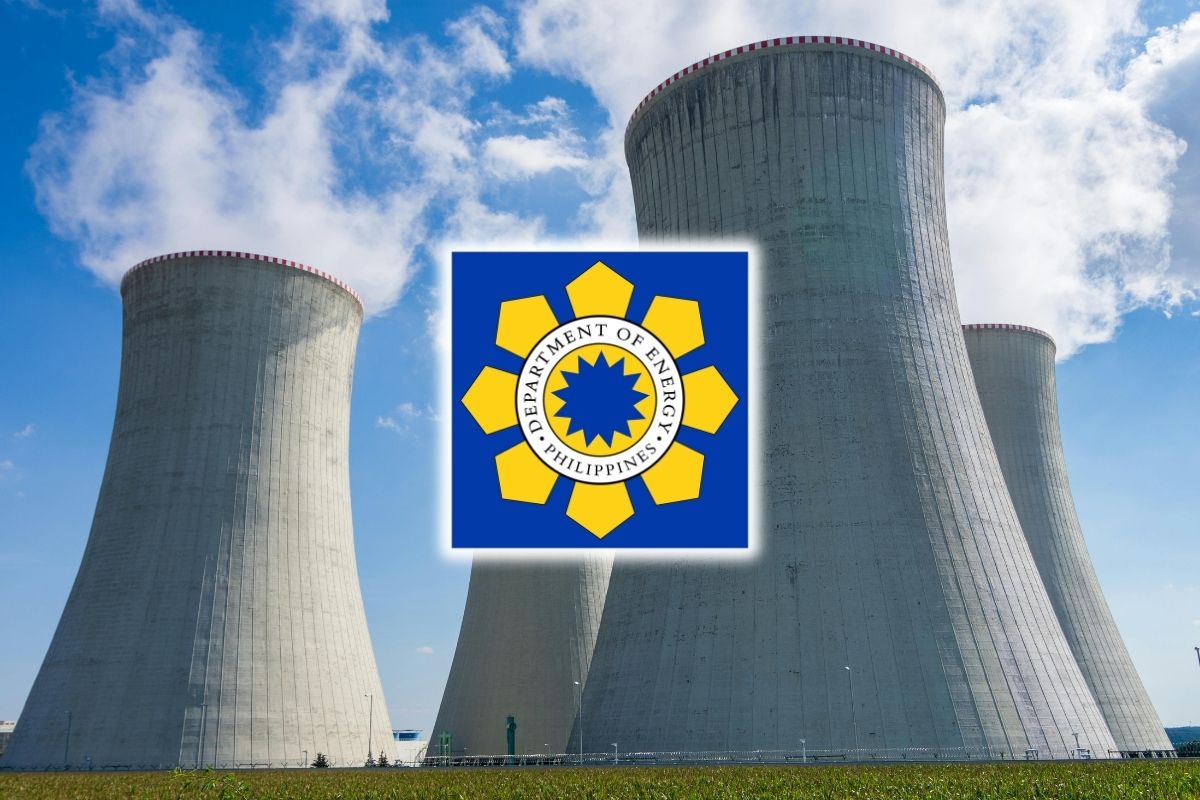
The Department of Energy (DOE) reported progress across policy, regulation, international cooperation, site assessment, financing, and public acceptance for the country’s nuclear energy program, as the Philippines prepares to move into the second phase of the International Atomic Energy Agency’s (IAEA) Milestones Approach.
DOE Undersecretary Giovanni Carlo J. Bacordo presented the update during an August 11 press conference, following President Ferdinand R. Marcos Jr.’s call in his 2026 State of the Nation Address for the country to revisit nuclear energy to strengthen energy security and lower electricity costs.
Under the IAEA framework, Phase 1 covers the groundwork needed before a country commits to a nuclear power program. Phase 2 covers building the infrastructure required to invite bids or negotiate a contract for a nuclear power project.
“Nuclear energy is not simply about deciding to build a power plant. We must build the institutions, the regulatory system, the technical capability, the financing framework, and the public confidence to support it. Our progress shows that the Philippines is putting those foundations in place,” Bacordo said.
The government has established its national position on nuclear energy through Executive Orders 116 and 164, and has deepened international cooperation through the 123 Agreement with the United States and a feasibility study on the Bataan Nuclear Power Plant with South Korea. During a December 2024 follow-up mission in Manila, the IAEA found the Philippines had fully addressed nine of 14 recommendations and 10 of 13 suggestions from its 2018 review.
On the legal side, Republic Act 12305 established the Philippine Atomic Energy Regulatory Authority (PhilATOM). The DOE is also working on measures to streamline nuclear power plant licensing and set the policy framework for a pioneer nuclear power project.
Potential plant sites in Bataan, Palawan, Masbate, Pangasinan, and Camarines Norte have undergone initial assessment, supported by an IAEA site and external events design mission. Public support for nuclear energy rose from 79 percent in 2019 to 82 percent in 2024, according to Social Weather Stations surveys.
For financing, the government is studying public-private partnerships, consortium arrangements, build-own-operate models, and vendor-supported mechanisms.
The DOE said it is now focused on the remaining items among the IAEA’s 19 nuclear infrastructure issues, with priority given to grid readiness, safety and security, legal and regulatory requirements, emergency preparedness, waste management, stakeholder involvement, and workforce development. Immediate priorities include operationalizing PhilATOM and completing its implementing rules, finalizing the RADPLAN, developing workforce and communications plans, and issuing a department circular on nuclear power tendering.
The Philippine International Nuclear Energy Forum 2026 is scheduled for October to bring together government, industry, and development partners to discuss next steps. The DOE is also finalizing its Phase 3 roadmap, covering the infrastructure needed to commission and operate the country’s first nuclear power plant.
“The objective is clear: to make sure that when the Philippines moves forward, we are institutionally, technically, financially, and regulatorily ready to do it safely and responsibly,” Bacordo said.