


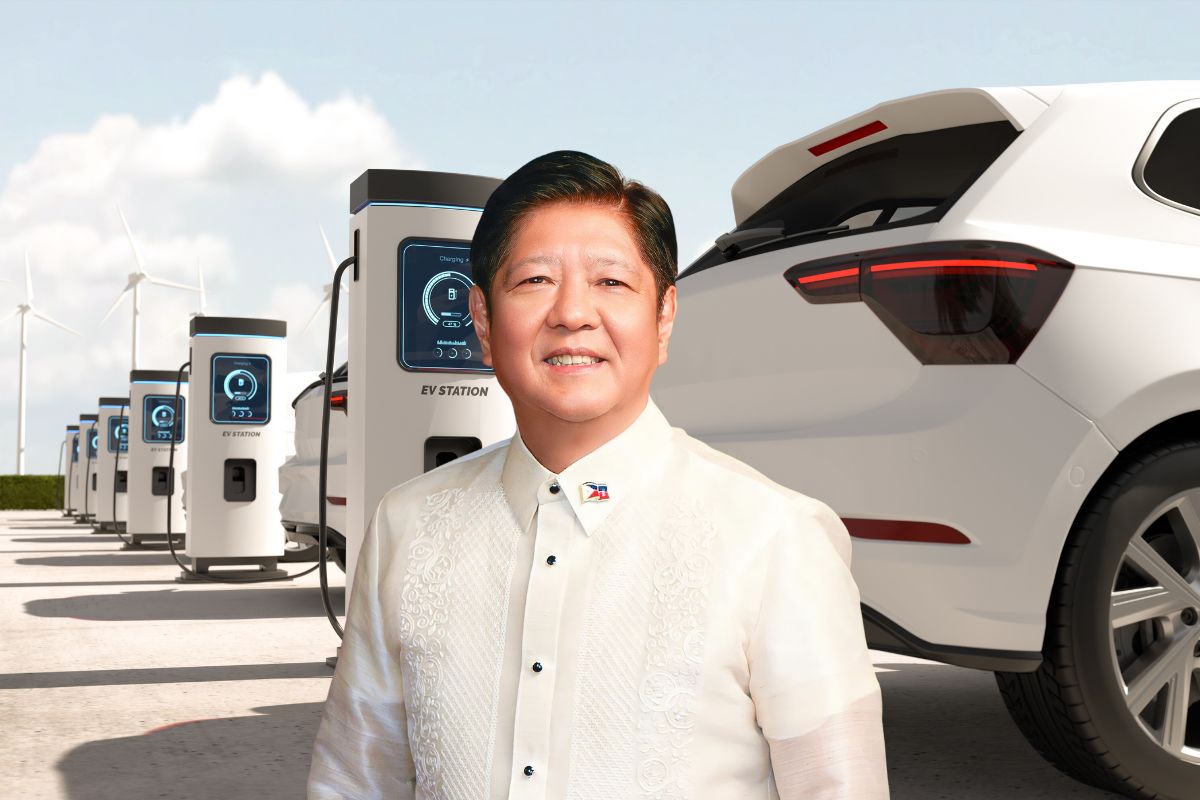
President Ferdinand R. Marcos Jr. renewed the government’s push for domestic electric vehicle production on Tuesday, saying that the goal is to build an all-Filipino electric tricycle before expanding into electric jeepneys.
Marcos visited MD Juan Enterprises, Inc., an automotive parts manufacturer in Caloocan City, to review the company’s facilities and determine what additional support and equipment it needs to produce EVs locally. MD Juan Enterprises is a beneficiary of the Department of Science and Technology’s (DOST) e-mobility program and currently makes machine-pressed metal parts and restoration kits for vintage, military, and civilian jeeps.
The visit fits into a broader DOST push already underway. The agency has set a national target of shifting 10 percent of public transport fleets to electric vehicles by 2040, and e-trikes developed through its research programs are already running in Cauayan City, Tuguegarao, Batanes, Iloilo, and parts of Metro Manila. One DOST-backed model, the C-Trike, a converted electric tricycle, runs on 4.5 kWh of power for 56.4 kilometers.
Marcos said the government is identifying gaps in MD Juan’s current capabilities and how DOST and other national agencies can help close them.
“Kaya tinitingnan namin ang mga facilities, ano yung nandito na, ano na yung mga kulang, ano pa yung mga kulang na susuportahan ng ating DOST, ng national government para makapagawa na tayo ng electric vehicle dito sa Pilipinas (That is why we are examining the facilities—what is already available, what is lacking and what the DOST and the national government can support so that we can manufacture electric vehicles here in the Philippines),” he said.
The President said building a domestic EV manufacturing base could reduce the country’s reliance on imported petroleum and support a more stable transport sector. He added that locally made EVs could also open up more sustainable livelihood options for transport workers.
Marcos said the next step is providing the equipment MD Juan Enterprises needs to begin production.
“And together with our technical consultants, I believe that we will soon be seeing a Filipino electric vehicle tricycle. At maybe down the road, makagawa na tayo ng (we will be able to produce electric) jeepney,” he said.
The administration has framed e-mobility as part of its broader transport modernization agenda, alongside efforts to cut fossil fuel dependence and grow local manufacturing. No timeline has been set yet for when the first locally built e-trike will roll out, or when electric jeepney production might begin.