



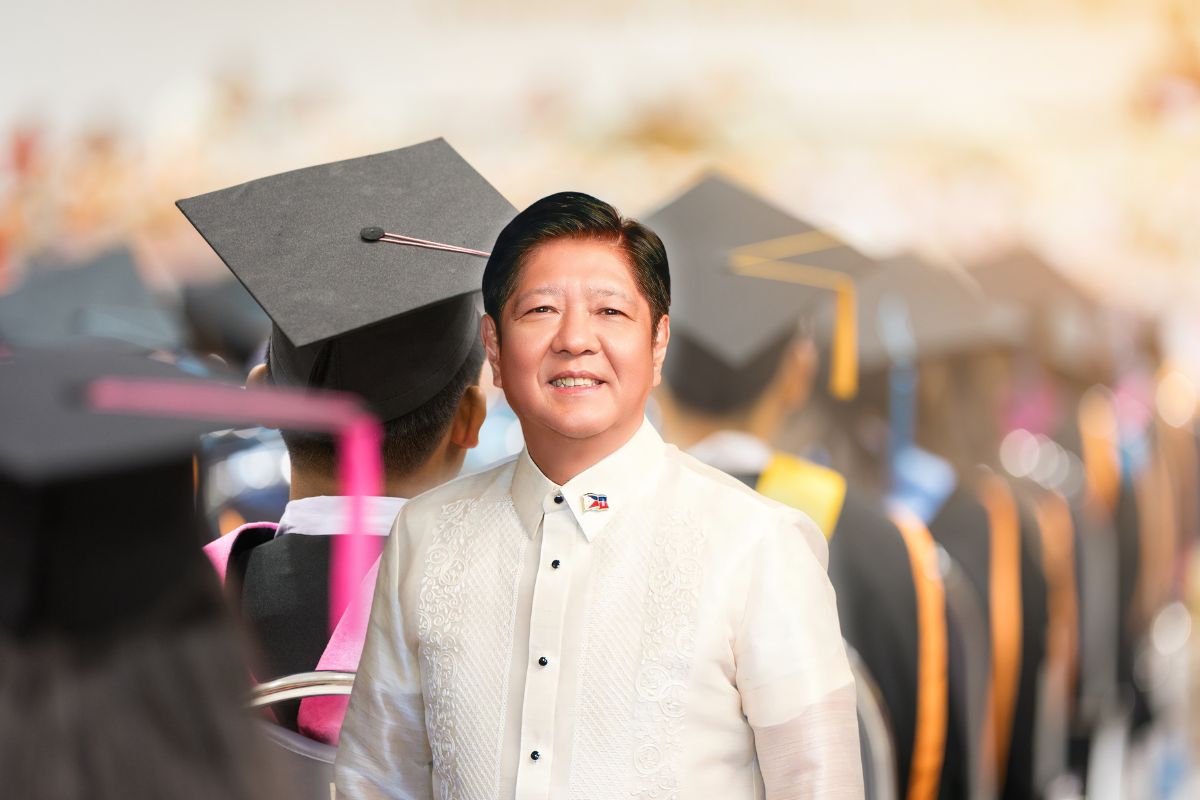
President Ferdinand Marcos Jr. signed a new law on September 4 that puts students from 4Ps (Pantawid Pamilyang Pilipino Program) households first in line for government college assistance. Republic Act No. 12325 amends the 2017 law that made public college and technical-vocational education free, adding stronger protections specifically for the country’s poorest families.
The ceremonial signing took place at Malacañang, with members of the Senate, House of Representatives, and Cabinet Secretaries in attendance.
Why the law changed
The original 2017 law, RA 10931, already gave free tuition and a subsidy program called the Tertiary Education Subsidy (TES) to poor students. But data showed the subsidy stopped reaching the people it was designed for. Aid increasingly went to wealthier applicants instead of the poorest households.
Lawmakers pointed to numbers from the Second Congressional Commission on Education (EDCOM 2): the share of subsidy grants going to the poorest households fell from 74.24% in 2018 to just 30.74% in 2022, while the share going to students in areas with no public university option rose sharply over the same period.
In Academic Year 2024–2025, only 4,746 of 384,388 4Ps senior high school graduates – about 1.23% – actually received the subsidy as first-year college students, according to EDCOM 2 figures cited by lawmakers.
An earlier EDCOM 2 hearing had flagged the same problem a year before the law passed. EDCOM 2 Executive Director Karol Mark Yee said at the time that the subsidy “was designed to support the poorest, yet many 4Ps graduates have been left out,” and called on the Commission on Higher Education (CHED) to work more closely with DSWD and DepEd to reach 4Ps graduates earlier, while they’re still in high school.
What stays the same
- Free tuition and other school fees at public colleges, universities, and state-run technical-vocational institutions
- The existing Tertiary Education Subsidy (TES) program itself remains in place, just restructured
What changes for 4Ps families
Priority now works like this: 4Ps households get first priority for available TES slots. Any remaining slots go to other applicants ranked by household income. Before RA 12325, there was no similar mechanism guaranteeing 4Ps families a place at the front of the line.
The law also expands what the subsidy can pay for. On top of tuition and fees, TES will now more explicitly cover:
- Internship or Related Learning Experience (RLE) costs
- Professional licensure and board exam fees
- Additional allowances for students with disabilities
- Book, transportation, and other education-related allowances (already part of TES, now folded into the restructured, better-targeted package)
Historically, subsidy amounts have ranged from roughly ₱10,000 per term to ₱20,000 per year for public school students, and up to ₱60,000 per year for eligible private school students who belong to the poorest income bracket or live in areas with no public university nearby.
RA 12325 doesn’t fix new peso amounts in the text of the law itself. Those figures, along with eligibility documentation and how the money is released, will be spelled out in implementing rules still being drafted.
A new track for private school students
RA 12325 also creates the Private Education Assistance Program, a new mechanism to help disadvantaged students – including qualified 4Ps beneficiaries – pursue priority courses at select private higher education institutions and technical-vocational schools, not just public ones.
Albay Rep. Raymond Adrian Salceda, who backed the measure in Congress, said the law addresses costs that persist even after a poor student gets into college. “There are fees, allowances, school supplies, and other expenses,” Salceda said. “We want to make sure that poverty does not force a qualified student to give up a college education.”
What happens next
At the signing, Marcos directed CHED, the Technical Education and Skills Development Authority (TESDA), and the Unified Student Financial Assistance System for Tertiary Education (UniFAST) to complete the implementing rules and regulations (IRR) for RA 12325.
Until the IRR is published, exact allowance amounts, updated application procedures, and specific eligibility documentation for the expanded coverage are not yet finalized. CHED has welcomed the signing of the law but has not yet released a public timeline for the IRR.
Students and families who currently receive or plan to apply for TES are advised to continue watching official channels – CHED, UniFAST, and DSWD – for updates once implementing guidelines are released.
About the laptop claim
Some posts are circulating on Facebook claiming that RA 12325 includes a free laptop for every 4Ps beneficiary. This is not confirmed in the text of the law or in any statement from Malacañang, CHED, DSWD, or UniFAST.
Beneficiaries should consider those specific device or cash-amount claims as unverified until CHED or UniFAST issues official guidance.













Thank you for sharing this informative article. It is helpful and interesting.