


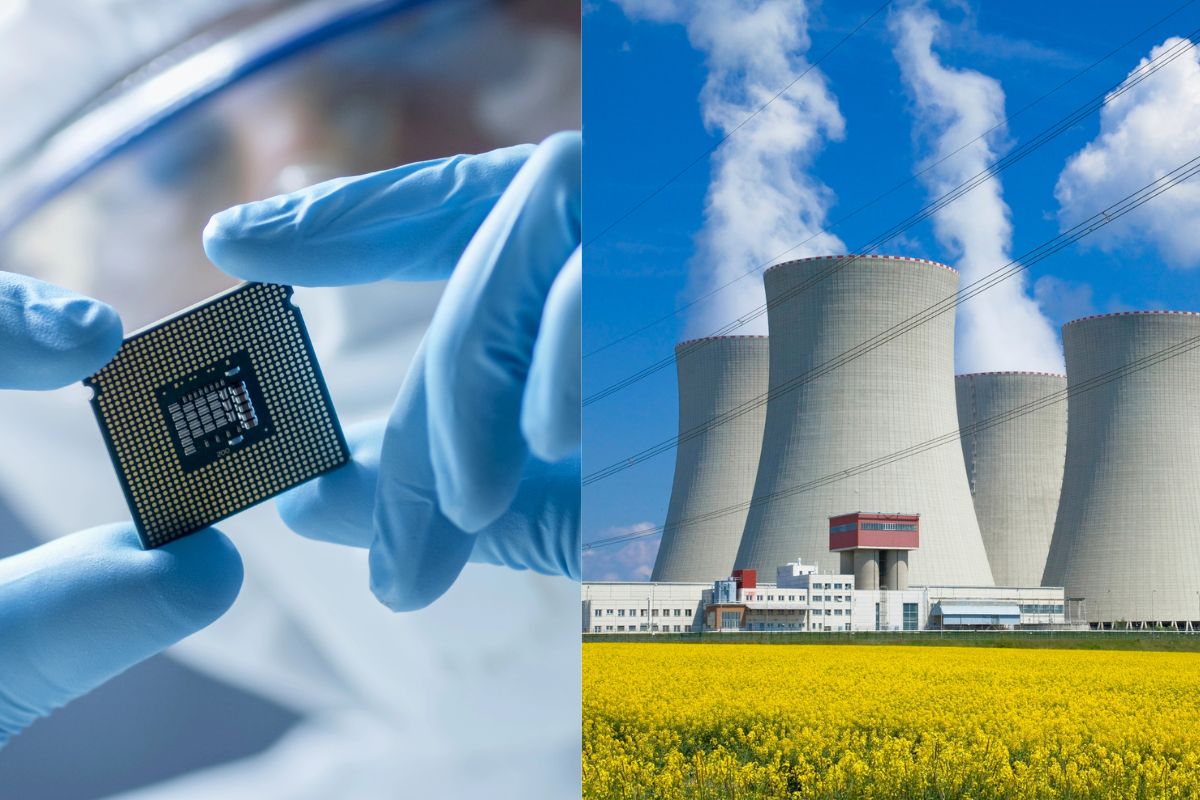
The Department of Energy (DOE) said future nuclear power projects could help supply electricity to the planned Pax Silica artificial intelligence (AI) hub in New Clark City, Capas, Tarlac, as the government works to secure power for one of the country’s largest industrial developments.
Pax Silica is a United States-backed AI, semiconductor, and advanced manufacturing hub proposed within the Luzon Economic Corridor. The project spans an estimated 1,618 to 1,620 hectares and is expected to require around 5 gigawatts of electricity once fully operational, according to the DOE. Its first phase is set to begin construction in 2028.
DOE Director and Nuclear Energy Program Inter-Agency Committee (NEP-IAC) Secretariat Head Patrick Aquino confirmed to Manila Bulletin on July 28 that future nuclear power developers could supply electricity to Pax Silica, with locators at the hub potentially becoming major power offtakers. The DOE is also set to formulate a department circular focused on ensuring adequate power supply for the project.
Energy companies Manila Electric Co. (Meralco) and Aboitiz Power Corp. (AboitizPower) have already expressed interest in developing nuclear projects, including small modular reactors (SMRs), even as the DOE continues finalizing the country’s nuclear licensing framework, siting rules, and other regulatory requirements.
“Deployment of nuclear power projects requires compliance with stringent requirements on safety, security, and safeguards,” Aquino told Manila Bulletin.
The NEP-IAC is still targeting the deployment of the Philippines’ first nuclear power project within six years, or by 2032, despite earlier concerns that the timeline could slip.
“2032 may still be possible, but it will take a lot of coordination and resources,” Aquino said.
Nuclear power is classified as a zero-carbon baseload source capable of round-the-clock operation. SMRs, which the DOE considers better suited to the Philippines than large conventional reactors, typically generate around 300 megawatts each – meaning several units would be needed to make a meaningful contribution to the hub’s 5-gigawatt requirement.
Because the government’s 2032 target falls four years after Pax Silica’s construction is due to start, the project’s early power supply will need to come from existing or near-term sources regardless of how the nuclear program progresses.
The Bases Conversion and Development Authority (BCDA) has said Pax Silica could generate as much as ₱180 billion in annual revenue and create close to 200,000 jobs once operational, underscoring the scale of the power commitment the government is now working to secure.